


The best DJ headphones are professional audio tools engineered for the specific demands of live mixing, prioritizing durability, superior sound isolation, accurate sound reproduction, and single-ear monitoring capability over consumer-oriented features like active noise cancellation. Key selection criteria include a robust, foldable build (often with metal-reinforced yokes), closed-back, over-ear design with high-density earpads for passive noise isolation, a balanced sound signature with precise bass for beatmatching, and a swiveling earcup mechanism (90 to 180 degrees). Leading entities in this space, such as Pioneer DJ, SennPioneer HDJ-X10heiser, and AIAIAI, dominate due to their focus on roadworthiness, modular serviceability, and seamless integration with standard club gear like the Pioneer CDJ-3000 and DJM-900NXS2 mixers. For most professional U.S.-based DJs, impedance between 16-64 ohms and high sensitivity (>100 dB/mW) are critical specifications to ensure adequate volume from any mixer or controller.
Why DJ Headphones Are a Specialized Instrument
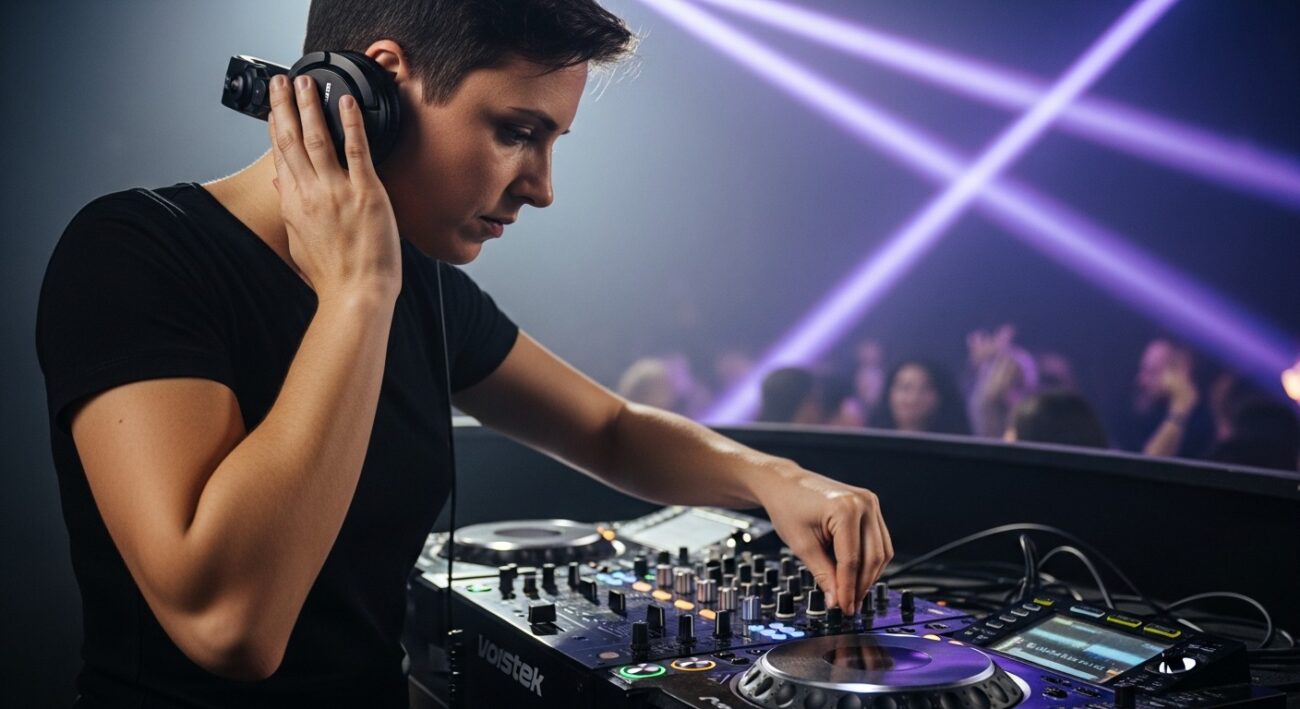
Navigating the saturated headphone market requires a fundamental shift in perspective: DJ headphones are not for passive listening; they are mission-critical professional tools. The environment of a DJ booth—whether a packed nightclub, a festival mainstage, or a mobile wedding setup—presents unique acoustic and physical challenges. From the thunderous ambient noise of a dancefloor to the need for rapid, one-handed cueing, every design element serves a functional purpose in the DJ workflow. This ultimate guide moves beyond superficial specifications to analyze the engineering principles, material science, and ergonomic designs that define top-tier disc jockey headphones. We will deconstruct the relationship between brand philosophies, technical features, and real-world application to equip you with the knowledge to make a strategic, long-term investment.
Chapter 1: The Foundational Pillars of Professional DJ Headphone Design
Understanding the “why” behind the design is crucial. These four pillars form the non-negotiable foundation for any professional-grade pair of best DJ headphones.
1. Durability & Build Quality: Engineered for the Road
The lifecycle of a DJ headphone involves constant travel, setup/breakdown, and vigorous use. Key durability entities include:
- Materials: Reinforced steel or aluminum headband yokes prevent snap failures. High-quality ABS plastics and spring-loaded, detented hinges ensure the swivel mechanism withstands thousands of cycles.
- Standards: Some brands, like V-Moda, advertise compliance with MIL-STD-810G military standards for shock and stress resistance.
- Modularity: A key trend led by AIAIAI and Sennheiser (HD 25) is user-replaceable parts. The ability to independently replace cables, earpads, headbands, and even driver units extends the product’s lifespan indefinitely, a core tenet of sustainable gear ownership.
2. Sound Isolation: The Battle Against Ambient Noise
In a loud environment, effective passive noise isolation is a safety and performance feature. This is achieved through:
- Closed-Back Design: Seals the back of the driver cup, preventing sound leakage in and out. This is a strict differentiator from open-back audiophile headphones like the Sennheiser HD 600 series, which are unsuitable for DJing.
- Earpad Composition & Fit: Memory foam earpads coated in protein leather or velour create an acoustic seal. The Sennheiser HD 25 uses a unique on-ear design with strong clamping force to achieve legendary isolation. Superior isolation allows for lower monitoring volumes, directly combating noise-induced hearing loss (NIHL), a documented occupational hazard for DJs.
3. Sound Signature & Accuracy: The Reference Standard
While consumer headphones may hype exaggerated bass (e.g., Beats by Dre), the best DJ headphones require a flat to slightly V-shaped response.
- Bass: Needs to be tight, fast, and accurate—not just loud. This allows for precise beatmatching and phase alignment between tracks. Bloated bass can mask mid-range cues.
- Mids & Highs: Clarity in the mid-range is essential for cueing vocal phrases and harmonic elements. Extended, non-fatiguing highs help identify hi-hat patterns and track texture.
- Reference Point: Many top DJ models, like the Audio-Technica ATH-M50x, are borrowed from the studio monitoring world, where accurate sound reproduction is paramount.
4. Ergonomics & Fit: Comfort Meets Security
A DJ set can last 2-6 hours. The design must balance long-term comfort with a secure fit during energetic performances.
- Weight Distribution: Lightweight materials are key, but the pivot points and headband padding must distribute clamp force evenly to avoid “hot spots.”
- Swivel Mechanism: This is the ergonomic cornerstone. A 90-degree minimum swivel enables the single-ear monitoring technique. A 180-degree swivel allows the earcup to lie flat against the chest when not in use and facilitates easy one-handed adjustment.
Chapter 2: Technical Deep Dive: Decoding the Specifications Sheet
Moving beyond marketing, these technical specs have direct, tangible impacts on performance.
Impedance (Ohms) & Sensitivity (dB/mW): The Power Equation
- Low to Medium Impedance (16-64 Ω): This is the standard for DJ headphones. It ensures the headphones can be driven to sufficiently loud levels by the headphone amplifier in any DJ mixer (e.g., Pioneer DJM-A9, Allen & Heath Xone:96) or controller without requiring an external amp.
- High Sensitivity (>100 dB/mW): This metric indicates how efficiently headphones convert power into volume. High sensitivity is non-negotiable for cutting through booth noise.
Frequency Response: The Range vs. The Curve
- A stated range of 5 Hz – 30 kHz is common but less important than the flatness of the curve. A jagged response with peaks and dips will color the sound inaccurately. Look for professional reviews with frequency response graphs.
Driver Size & Type: The Sound Engine
- While 40mm to 50mm dynamic drivers are most common, driver technology and tuning matter more than size. For example, Technics employs a “Free Edge” diaphragm in its EAH-DJ1200 model to reduce distortion, a technology trickled down from its high-end hi-fi division.
Cable Systems: Coiled vs. Straight & Detachable
- Coiled Cables: A professional tradition. They offer extended reach when stretched and retract for a tidy booth. Ideal for club DJs who may step back from the mixer.
- Straight Detachable Cables: Favored by mobile and festival DJs for simplicity and ease of replacement. The 3.5mm to 1/4″ screw-on adapter is a ubiquitous entity. A single-sided cable entry (like on the Pioneer HDJ-X10) reduces cable interference.
Chapter 3: Entity Analysis: The Brand Ecosystem and Their Philosophies
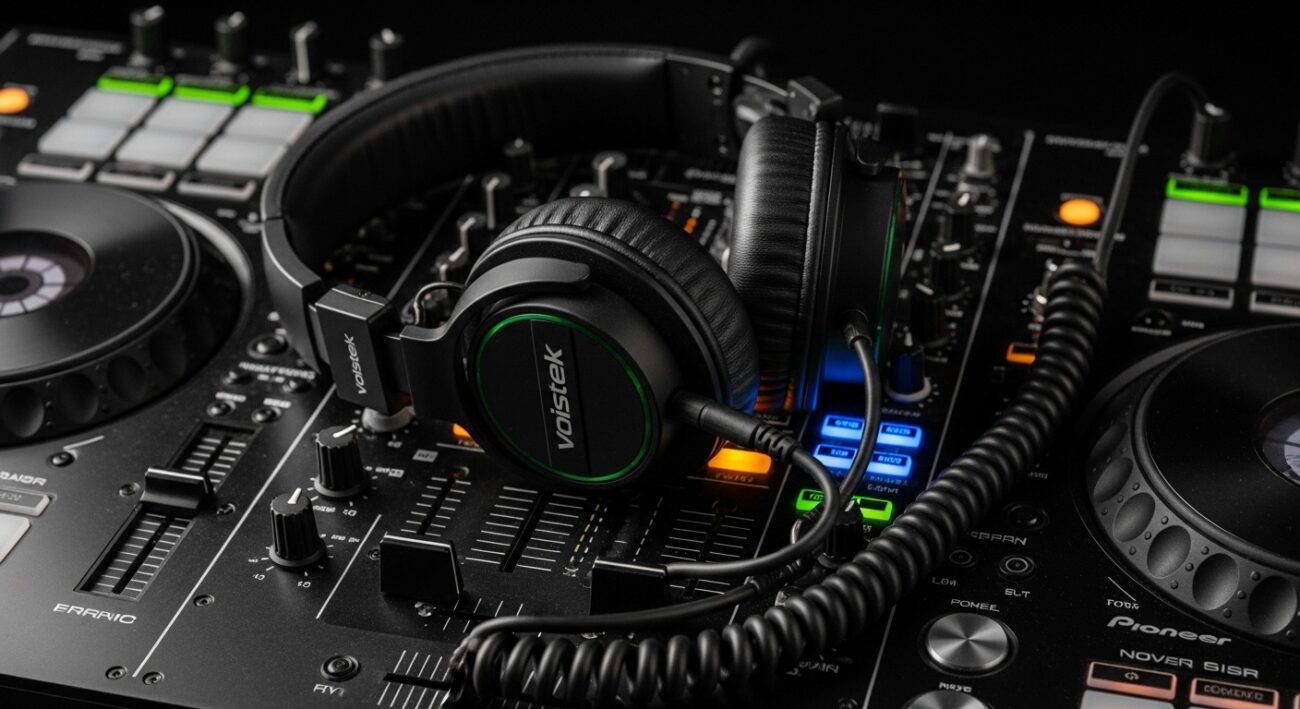
The market is shaped by brands with distinct identities and target users.
- Pioneer DJ: The Industry Standard Entity. As the manufacturer of the ubiquitous CDJ-2000NXS2 and DJM-900NXS2 club setup, Pioneer DJ headphones are designed for complete ecosystem synergy. Models like the flagship HDJ-X10 are built to withstand tour-level abuse, offer extremely high maximum input power (3,500 mW), and have a sound profile optimized for electronic dance music. They are the default, risk-averse choice for touring professionals.
- Sennheiser: The Legend of Precision. The Sennheiser HD 25 is arguably the most iconic DJ headphone in history. Its split headband design, fully modular construction, and bright, detailed sound profile have made it a staple, particularly in the techno, house, and broadcasting worlds. Its on-ear design provides exceptional isolation through clamping force, a unique approach in an over-ear dominated field.
- AIAIAI: The Modular Innovator. This Danish company disrupted the market with the TMA-2 Modular Headphone System. DJs can literally build their headphones by selecting a Headband, Speaker Unit (e.g., Studio, DJ, or Balanced), Earpads, and Cable. This aligns with modern values of sustainability, personalization, and repairability, appealing to the producer-DJ and the environmentally conscious artist.
- V-Moda & Technics: The Specialists.
- V-Moda champions the “Built Like a Tank” ethos with metal alloy frames and customizable “Shield” plates. Their sound signature, as heard in the Crossfade LP2, is often more bass-forward and “fun,” appealing to the festival and crossover DJ scene.
- Technics, with its storied hi-fi legacy, re-entered the market with the EAH-DJ1200. It incorporates hybrid noise cancellation (usable in wired mode without latency) and audiophile-grade drivers, targeting the DJ who refuses to compromise on critical listening quality.
Chapter 4: Applied Selection: Matching Headphones to DJ Style & Environment
Your primary use case is the ultimate filter. This topical cluster maps entities to scenarios.
| DJ Profile | Primary Environment | Key Needs | Recommended Entity Examples |
|---|---|---|---|
| The Club/Touring Pro | Nightclubs, Festivals | Max durability, max isolation, industry-standard compatibility | Pioneer HDJ-X10, Sennheiser HD 25, V-Moda Crossfade LP2 |
| The Mobile/Event DJ | Weddings, Corporates, Bars | All-day comfort, versatile sound (music & speech), portability | Audio-Technica ATH-M50x, Beyerdynamic DT 700 Pro X, Pioneer HDJ-CX |
| The Producer-DJ | Home Studio, Hybrid Setups | Accurate/flat response, comfort for long sessions, modularity | AIAIAI TMA-2 (Studio Speakers), Sennheiser HD 26 Pro, Technics EAH-DJ1200 |
| The Beginner/Bedroom DJ | Home Setup | Value, foundational durability, learning-friendly features | Pioneer HDJ-CX1, Numark HF125, Reloop RH-2000 |
Chapter 5: Advanced Considerations & Future Trends
- Wireless & Latency: True wireless Bluetooth headphones are generally unsuitable for live mixing due to audio latency (delay). However, some models like the Pioneer HDJ-X5BT offer a wired mode for performance and Bluetooth for other tasks, a hybrid approach gaining traction.
- Hearing Health: The World Health Organization (WHO) recommends reducing exposure to volumes over 85 dB. Superior isolation is the first line of defense, allowing lower monitoring levels. Some DJs use custom-molded earpieces (like ACS Custom) for ultimate isolation and hearing protection.
- The Rise of Modularity: The success of AIAIAI signals a shift towards user-repairable gear, challenging the disposable electronics model. This aligns with broader ESG (Environmental, Social, Governance) considerations in professional purchasing.
Comprehensive FAQ: Targeting “People Also Ask” Snippets
Can you use Beats or AirPods Max for DJing?
What is the single most important feature in DJ headphones?
How much should I spend on my first pair of DJ headphones?
What’s the difference between the Pioneer HDJ-X5, X7, and X10?
HDJ-X5: The reliable entry-point with 40mm drivers.
HDJ-X7: The mid-range workhorse with improved 50mm drivers and a wider frequency response.
HDJ-X10: The flagship, featuring magnesium alloy arms, 50mm “HD” drivers, exceptional power handling (3,500mW), and a luxurious carry case. It’s built for the highest professional standard.
Why do so many DJs use only one earphone?
Final Pre-Purchase Checklist & Actionable Conclusion
Use this verified checklist before completing your purchase:
- [√] Build Quality: Metal-reinforced hinges? Foldable/swiveling? Replaceable parts?
- [√] Isolation: Closed-back, over-ear design with thick, sealing earpads.
- [√] Sound: Balanced signature with precise bass (read professional reviews, not just specs).
- [√] Fit & Comfort: Secure but comfortable for >2 hours. Adjustable headband.
- [√] Swivel: At least 90-degree rotation for single-ear monitoring.
- [√] Specs: Impedance (16-64 Ω) and High Sensitivity (>100 dB/mW) for adequate volume.
- [√] Cable: Detachable? Coiled or straight based on your mobility needs?
- [√] Use Case Match: Does this model excel in your primary environment (club, mobile, studio)?
Conclusion: Choosing the best DJ headphones is a decisive step in your professional audio chain. It is an investment in your craft, your hearing health, and your on-stage reliability. By applying the framework in this guide—prioritizing durability, isolation, accuracy, and ergonomics—you move beyond brand hype to make a technically informed decision. Whether your path leads you to the tour-proven resilience of Pioneer DJ, the iconic precision of Sennheiser, the customizable innovation of AIAIAI, or the audiophile-grade performance of Technics, you are now equipped to select a tool that will faithfully translate your skill into performance for years to come. Remember, in the dynamic world of DJing, your headphones are your most personal interface with the music; choose a partner that empowers your creativity without compromise.
“Join 10,000+ DJs Who Upgraded Their Sound”
“Over 10,000 professional DJs trust Voistek for their headphone needs—from bedroom producers to festival headliners. Try any pair risk-free for 30 days. If they don’t meet the standards outlined in this guide, return them for free. Plus, get our exclusive DJ Gear Maintenance Checklist (valued at $29) free with your first order.”