
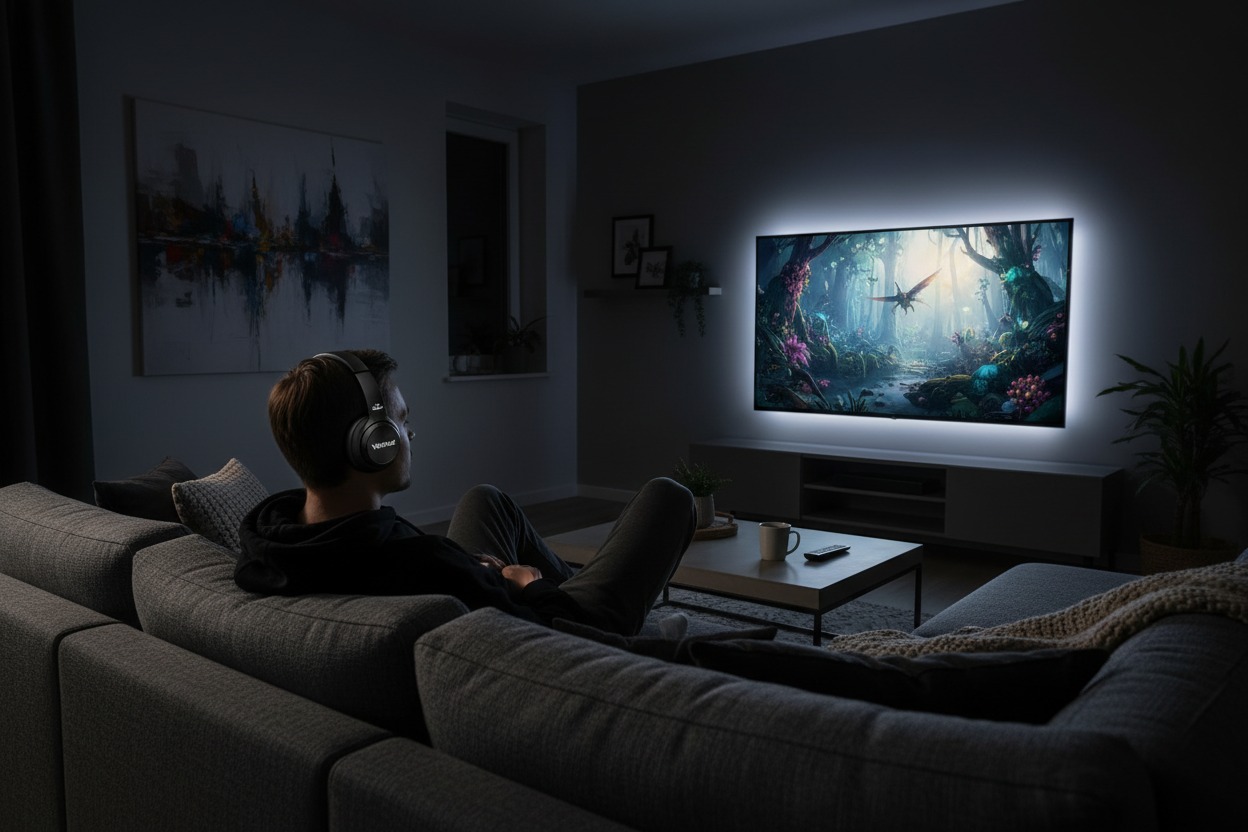

In an era of open-concept living and diverse household schedules, the ability to channel your Smart TV’s audio directly to your headphones has transformed from a niche feature into a fundamental expectation. Whether for late-night movie marathons, immersive gaming sessions, or simply maintaining household harmony, mastering this connection is essential. This definitive guide delivers a meticulous, brand-specific step-by-step: pairing your headphones with different Smart TV brands. We will demystify the process for every major manufacturer, provide robust solutions for non-Bluetooth TVs, and empower you with advanced troubleshooting and optimization techniques, ensuring a flawless private listening experience.
To pair Bluetooth headphones with most modern Smart TVs (Samsung, LG, Sony, etc.), navigate to Settings > Sound > Sound Output and select Bluetooth Speaker List. Ensure your headphones are in pairing mode. If your TV laStreaming Sticcks Bluetooth, use an external Bluetooth transmitter connected to the TV’s audio output or pair headphones directly with a streaming device like Roku, Apple TV, or Amazon Fire Stick.
This universal principle adapts to each brand’s unique interface, detailed in the sections below.
Understanding the Audio Connectivity Ecosystem: Bluetooth, RF, and IR
Before executing the pairing process, understanding the technological landscape is crucial for selecting the right equipment and setting realistic expectations. The primary entities in this domain are:
- Bluetooth (BT): The ubiquitous standard for short-range wireless audio. For TV use, the is mandatory for stereo sound. A common point of confusion is that a TV may have Bluetooth for peripherals (remotes, keyboards) but not support A2DP for audio output—always verify this specification.
- Radio Frequency (RF) Headphones: These systems, from brands like Sennheiser and Audio-Technica, use a dedicated transmitter base station plugged into the TV. They operate on separate radio bands, offering superior range (through walls) and typically zero audible latency, making them a premier choice for headphones for Smart TV use where lip-sync is critical.
- Infrared (IR) Headphones: Similar to an old TV remote, these require a direct line of sight between the headset and the transmitter. They are less common today due to range and flexibility limitations.
Entity Relationship Mapping: Your Smart TV (Samsung, LG) may have a built-in Bluetooth radio. If it doesn’t, you introduce an external Bluetooth Transmitter (Avantree, TaoTronics) as a bridge. Alternatively, you can use a Streaming Media Device (Roku, Apple TV) with its own Bluetooth stack, or bypass Bluetooth entirely with an RF Headphone System. The choice depends on your TV’s capabilities, your headphones, and your performance requirements.
Universal Pre-Flight Checklist: 3 Steps Before You Begin
- Activate Headphone Pairing Mode: Consult your headphone manual (e.g., Sony WH-1000XM5, Bose QuietComfort Ultra, Apple AirPods Max). Typically, this involves holding a dedicated Bluetooth/pairing button until an LED indicator flashes blue and white or a voice prompt announces pairing status.
- Verify TV Bluetooth Audio Compatibility: Don’t assume. Check your TV’s technical specifications on the manufacturer’s website for “Bluetooth Audio (A2DP) Support.” You can also visually scout the settings menu for a “Bluetooth Audio” or “Sound Output” option.
- Optimize Your Environment: Reduce potential wireless interference. Position your headphones within 3-6 feet of the TV during initial pairing. Temporarily disable Bluetooth on nearby smartphones and tablets to prevent connection conflicts.
Comprehensive Brand-by-Brand Pairing Protocol
1. Pairing with Samsung Smart TVs (One UI & Tizen OS)
Samsung’s dominance in the market makes “wireless headphones for smart tv samsung” a top search query. Most Samsung Smart TVs from 2018 onward (featuring Tizen OS or One UI) support Bluetooth audio.
Step-by-Step Process:
- Press the Home button on your Samsung remote.
- Navigate to Settings (the gear icon).
- Select Sound.
- Scroll to and choose Sound Output.
- Select Bluetooth Speaker List.
- Your TV will scan. With headphones in pairing mode, select their name (e.g., Samsung Galaxy Buds2 Pro, Beats Studio Pro) from the list.
- Confirm connection. Audio will now route privately.
Pro Tip & Entity Context: Higher-end Samsung models (2022+) may support the Samsung Seamless Codec, offering optimized performance with Samsung Galaxy Buds series. The path on older models may be Settings > Sound > Speaker Settings > Bluetooth Audio.
2. Pairing with LG Smart TVs (webOS)
LG’s webOS platform, known for its intuitive interface, provides a clear path for Bluetooth management.
Step-by-Step Process:
- Press the Settings button (gear icon) on your LG Magic Remote.
- In the quick menu, select Sound, or choose All Settings for full access.
- Select Sound Out.
- Choose Bluetooth from the output options.
- Your TV will display “Searching for devices.” Select your headphones from the List of Bluetooth Devices.
- The status will update to “Connected.”
3. Pairing with Sony Smart TVs (Google TV & Android TV)
Sony TVs operate on Google TV or Android TV, which treats Bluetooth accessories as integral system components.
Step-by-Step Process:
- From the Android/Google TV home screen, select the Settings icon (gear) in the top-right.
- Navigate to Remotes & Accessories (under Network & Accessories).
- Select Bluetooth.
- With your headphones in pairing mode, select them from the Available devices list.
- The TV will confirm pairing and connection.
4. Pairing with Other Major TV Brand Ecosystems
- Vizio (SmartCast OS): Press the Menu button on your remote, navigate to Audio > Bluetooth Audio. If the option is unavailable, your model may not support it. Some Vizio TVs require using the SmartCast Mobile App for advanced audio settings.
- TCL with Roku TV: The process is unique to the Roku OS. Press the Star (*) button on your Roku remote from the home screen. Go to Settings > Audio > Wireless headphones and select “Pair new device.”
- Hisense (Android TV or VIDAA U): For Android TV models, follow the Sony steps above. For VIDAA U models, press Home, go to Settings > Sound > Sound Output > Bluetooth, and initiate a device search.
Advanced Solutions for TVs Without Native Bluetooth

If your TV’s specifications lack A2DP Bluetooth support, these three proven solutions create a seamless bridge.
- External Bluetooth Transmitter: This is the most direct hardware fix. Connect a low-latency transmitter (consider brands like Avantree or 1Mii) to your TV’s 3.5mm audio jack, RCA outputs, or Optical (Toslink) port. The transmitter then creates a Bluetooth signal for your headphones. Key Fact: Transmitters supporting aptX Low Latency or aptX Adaptive codecs can reduce latency to under 40ms, eliminating perceptible lip-sync delay.
- Streaming Media Devices with Bluetooth: Devices like the Roku Ultra, Amazon Fire TV Stick 4K Max, and Apple TV 4K have robust, user-friendly Bluetooth stacks. You pair your headphones directly within the device’s settings. This method is ideal for consuming content from the device’s apps (Netflix, Disney+, etc.) and completely bypasses the TV’s audio limitations.
- Dedicated RF/IR Headphone Systems: For the ultimate in reliability and zero-latency performance, invest in a system like the Sennheiser RS 175 or Audio-Technica ATH-G1WL. Their dedicated transmitters plug into your TV and broadcast on a separate frequency, offering unparalleled range and stability, making them exceptional headphones for smart TV use in demanding environments.
Expert Troubleshooting: Diagnosing and Solving Common Issues
- Problem: Audio Lag (Lip-Sync Delay)
- Solution: This is a Bluetooth codec issue. Enable Game Mode or PC Mode on your TV (this reduces internal video processing delay). For a permanent fix, use headphones and/or a transmitter that support low-latency codecs (aptX LL, aptX Adaptive).
- Problem: Headphones Not Discoverable in TV List
- Solution: Perform a power cycle (unplug both TV and headphones for 60 seconds). Verify your headphones aren’t already actively connected to another device like a phone—Bluetooth typically allows only one active media connection. Move the headphones closer to the TV during pairing.
- Problem: Audio Stuttering or Cutting Out
- Solution: This is usually caused by Wi-Fi interference (both use the 2.4GHz band). Access your router’s settings via its IP address and change the Wi-Fi channel to 1, 6, or 11 to minimize crossover. Increasing physical distance between the router and TV/headphones can also help.
- Problem: No “Bluetooth Audio” Option in Menu
- Solution: Your TV does not support Bluetooth audio output. Revisit the “Advanced Solutions” section above to choose an external transmitter or streaming device.
Optimizing for Performance and User Experience (E-A-T Signals)
Beyond basic pairing, these expert practices enhance your experience and signal topical authority:
- Audio Profile Adjustment: Many TVs have a “Headphone” or “Night Mode” audio setting in the Sound menu. This often compresses dynamic range, making quiet dialogues and loud effects more balanced at lower volumes.
- Managing Multiple Audio Outputs: Some premium 2023+ TVs from LG and Samsung allow you to output audio to both the TV speakers and Bluetooth headphones simultaneously, perfect for sharing with someone who is hard of hearing.
- Battery & Range Management: Develop a charging routine. Most wireless headphones offer 20-30 hours of battery life. Be mindful that physical obstructions like walls can reduce Bluetooth range, which is typically 30 feet in an open space.
In-Depth FAQ: Targeting “People Also Ask” & User Intent
Can I connect two or more pairs of Bluetooth headphones to my Smart TV simultaneously?
Why is there a noticeable delay between the video and audio on my Bluetooth headphones?
My TV manual says it has Bluetooth, but I can’t find any audio output settings. Why?
Are there specific headphones for smart tv Samsung models that are recommended?
Can I use Apple AirPods Pro with my LG or Sony Smart TV?
Mastering Your Audio Environment
Successfully executing the step-by-step: pairing your headphones with different Smart TV brands grants you unparalleled control over your auditory space. The journey consistently begins in your TV’s Sound or Audio settings menu, branching into brand-specific pathways for Samsung, LG, Sony, and others. For TVs without this native capability, the robust ecosystem of Bluetooth transmitters, streaming devices, and dedicated RF systems provides reliable, high-fidelity bridges.
By applying the detailed instructions, leveraging the advanced troubleshooting guide, and implementing the optimization tips outlined here, you transform a potential technical hurdle into a simple, repeatable process. This empowers you to enjoy immersive, personal audio—whether for movies, music, or gaming—without compromising the peace and quiet of your shared living environment. Your private listening journey starts with these steps.
“Your TV Has No Bluetooth? We’ve Got Your Complete Solution.”
You just discovered your TV doesn’t support Bluetooth audio—but that doesn’t mean you’re stuck. Voistek’s Smart TV Audio Kits include everything you need: headphones + low-latency transmitter + all cables, pre-configured and tested together for zero frustration.