

The worth of the most overpriced headphones is not determined by sound quality alone but by a complex value equation involving diminishing returns in audio, luxury craftsmanship, and personal priority. For the vast majority of listeners, headphones exceeding $3,000—such as the $59,000 Sennheiser HE-1 or $5,000+ models from Focal and Audeze—are not a rational performance-per-dollar investment. You typically pay 10x the price for what may be a 10-20% subjective improvement in acoustic refinement. Their true value lies in exotic materials, hand-crafted assembly, brand prestige, and the psychological ownership of a technological artifact. For the professional mastering engineer or the luxury collector, they may justify their cost. For the average consumer streaming from a smartphone, a high-quality mid-fi headphone paired with a dedicated DAC/amp offers a far more sensible path to superior sound.
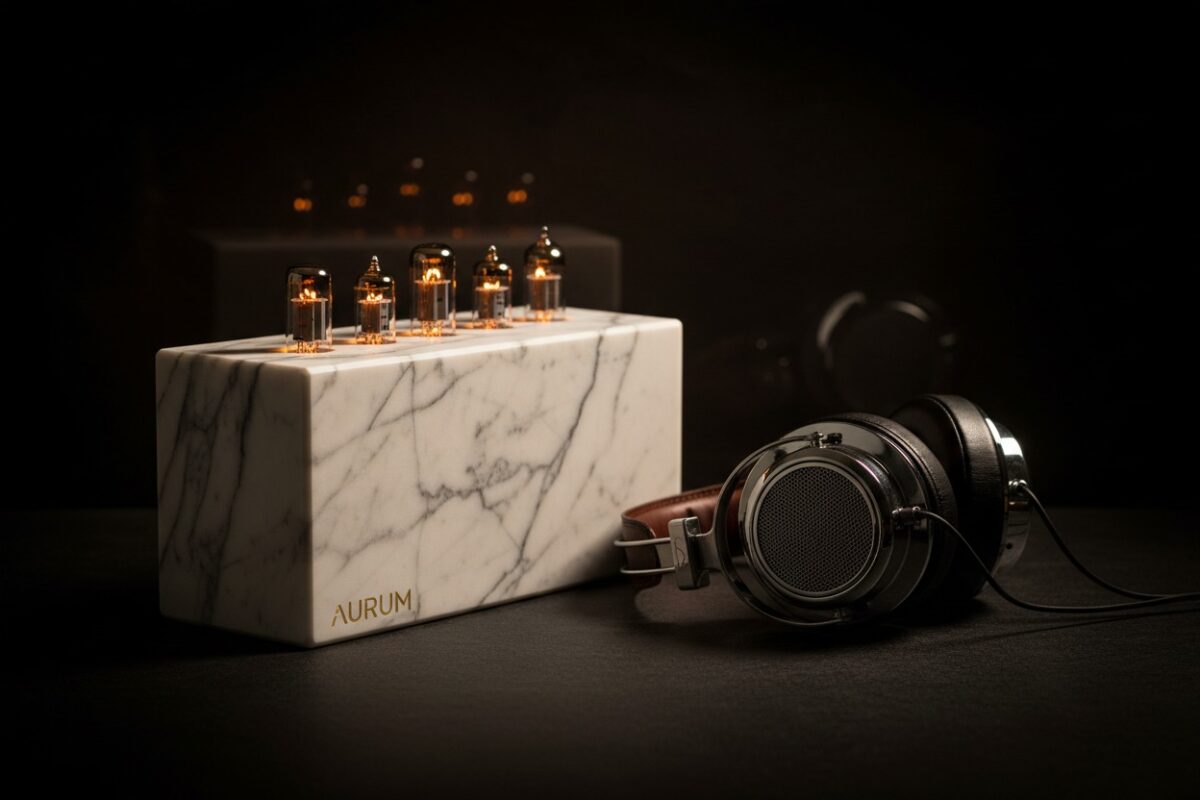
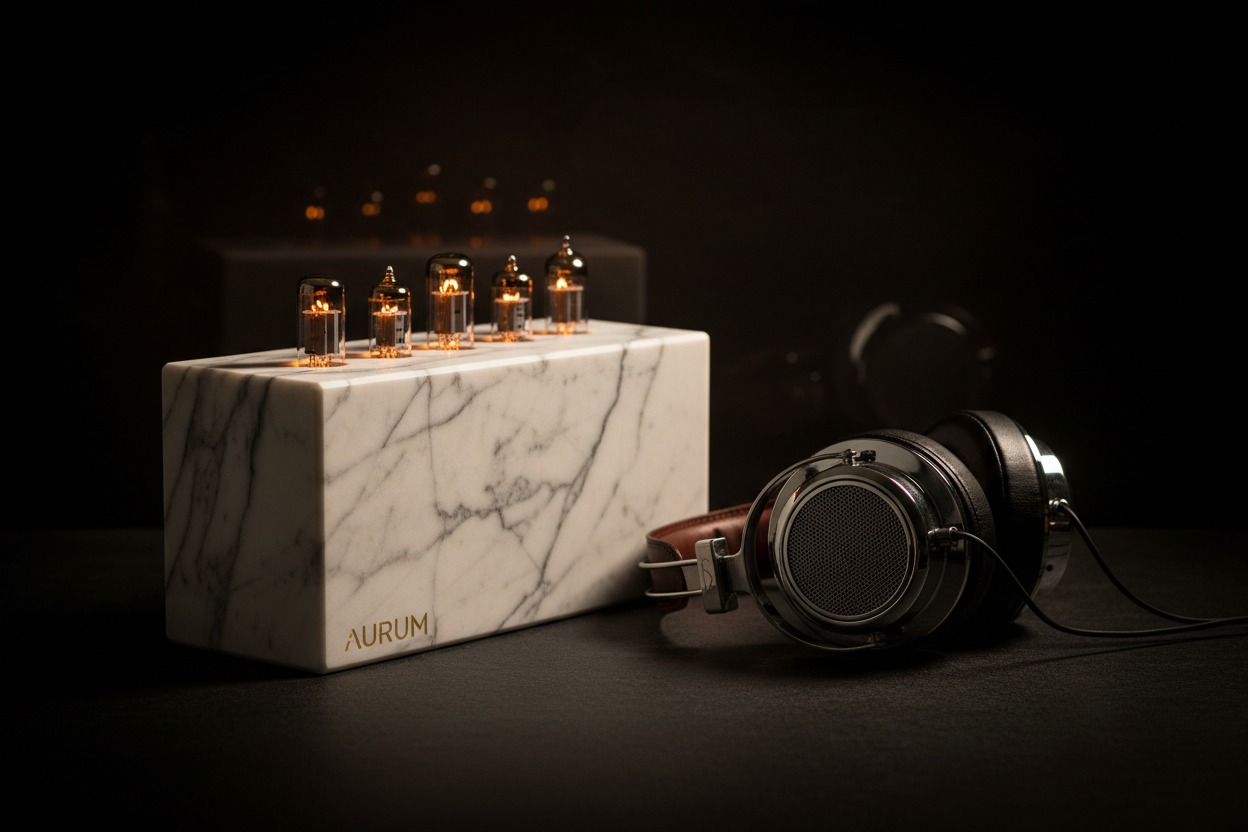
The pursuit of perfect sound has birthed a market segment where price tags defy conventional logic. When discussing the most expensive headphones brands, we enter a realm where Sennheiser’s HE-1 sits at a throne of Carrara marble priced at $59,000, flanked by flagship models from Focal Utopia, Audeze LCD-5, Abyss AB-1266, and Warwick Acoustics BRAVURA, each commanding thousands of dollars. This landscape forces a critical evaluation: are these most overpriced headphones a triumph of engineering or a testament to vanity? This analysis moves beyond simple yes/no to dissect the entity relationships between cost, technology, craftsmanship, and subjective value, providing a definitive guide for any prospective buyer.
Deconstructing the “Overpriced” Label: A Multi-Factor Framework
Labeling a product “overpriced” requires defining the parameters of value. In high-end audio, value is a multi-axis graph plotting:
- Acoustic Performance: Measurable and subjective sound quality.
- Build and Materials: Tangible construction quality.
- Brand Equity and Exclusivity: Intangible prestige.
- Technological Innovation: Proprietary advancements.
The core tension lies in the non-linear relationship between these axes. A headphone can be objectively overpriced on axis #1 while being subjectively justified on axes #2, #3, and #4. For instance, the use of beryllium drivers (a costly, high-performance material) by Focal impacts axis #1 and #4, while the hand-polished wood of a ZMF Atrium impacts axis #2, creating value for different buyer personas.
Entity Deep Dive: The Sennheiser HE-1 as the Ultimate Case Study
The Sennheiser HE-1 (a direct descendant of the legendary Orpheus HE90) is not merely a headphone; it is an integrated electrostatic system and the undisputed entity leader in this category. Its $59,000 price anchors the entire “most overpriced” conversation.
A Breakdown of Its Entity Relationships and Value Proposition:
- Core Technology: Electrostatic drivers with platinum-vaporized diaphragms. These require the integrated, marble-clad vacuum tube amplifier to generate the necessary high-voltage bias.
- Material Entities: Carrara marble enclosure, precious metal electrodes, and hand-selected components. These are luxury material entities with negligible acoustic return but immense tactile and visual prestige.
- Experience Entity: The automated start-up sequence—where the amplifier rises and tubes illuminate—is a ritualistic user experience integral to the product’s identity.
- Knowledge Graph Alignment: In search, the HE-1 is linked to entities like “most expensive thing,” “audio jewelry,” and “statement product.” Its value is understood in this context, not alongside consumer-grade headphones.
Verdict: The HE-1’s price is justified only if you assign high value to uncompromised craftsmanship, technological theater, and absolute exclusivity. As a tool for listening, it is the definitive example of diminishing returns.
The Anatomy of Cost: Where Does the Money Go?
Understanding the bill of materials and processes for brands like Audeze, HiFiMan, Meze Audio, and Focal demystifies pricing.
| Cost Factor | Description & Entity Examples | Impact on Price |
|---|---|---|
| R&D (Research & Development) | Developing proprietary tech: Audeze’s Fluxor magnets & Uniforce diaphragms, Focal’s Beryllium M-shape domes. Years of acoustic engineering. | High |
| Exotic Materials | Beryllium, Graphene, Zirconium, Carbon Fiber, aged leather, hardwood cups. These improve speed, durability, and aesthetics. | Very High |
| Labor & Craftsmanship | Hand-assembly in specific regions (e.g., Focal in Saint-Étienne, France; Audeze in Costa Mesa, USA). Small-batch production with rigorous QC. | High |
| Supporting Ecosystem | High-end headphones often reveal flaws in source gear. They necessitate investment in headphone amplifiers (e.g., Chord Electronics, Schiit Audio), high-resolution DACs, and lossless audio streams. | Indirect but Significant |
The Inescapable Law of Diminishing Returns in Audio
This economic principle is the single most important concept for buyers. The performance-to-cost curve rises steeply initially, then flattens dramatically.
- The Sweet Spot ($100 – $600): Here, entities like the Sennheiser HD 6XX, HiFiMan Sundara, and Beyerdynamic DT 900 Pro X offer exceptional performance. Each dollar spent yields a very clear improvement.
- High-Fidelity Territory ($600 – $1,500): The domain of reference-grade sound. Includes the Sennheiser HD 800 S (renowned for its soundstage), Audeze LCD-X, and Focal Clear Mg. Improvements are in nuance, detail, and tonal accuracy.
- Attainable Summit ($1,500 – $4,000): Flagships like the Focal Utopia, Audeze LCD-5, and Meze Empyrean. You pay for the final increments of performance and premium materials. The value proposition narrows.
- The Realm of Luxury ($4,000+): This includes the HE-1, Abyss AB-1266, and Warwick BRAVURA. Performance gains are minimal and highly subjective. Value is dominated by craftsmanship, exclusivity, and brand prestige entities.
Target Audience Analysis: Who Actually Benefits?
The worthiness of the investment is entirely persona-dependent.
- The Critical Listener/Audio Professional:
- Entities: Mastering engineers, studio mixers.
- Justification: Requires absolute transparency, detail retrieval, and frequency response accuracy for work. Tools like the Audeze LCD-5 are professional instruments.
- Worth It? Often, yes, as a business expense for critical decision-making.
- The Discerning Audiophile with a High-End System:
- Entities: Enthusiasts with dedicated headphone amps, DACs, and lossless music libraries.
- Justification: Seeks the last ounce of performance. Can appreciate the subtleties a $4,000 headphone reveals over a $1,500 one.
- Worth It? Subjectively, maybe. This is the core demographic for summit-fi headphones.
- The Luxury and Collector Market:
- Entities: Individuals for whom audio is a luxury hobby.
- Justification: Values object design, material rarity, and ownership experience as much as sound. The product is an “audio sculpture.”
- Worth It? Yes, by their values. They are not buying decibels; they are buying artistry and exclusivity.
- The Casual or Mobile Listener:
- Entities: Streams from Spotify/Apple Music via smartphone or laptop.
- Justification: Minimal. These headphones are often underpowered and over-resolved for compressed audio, revealing flaws in the source.
- Worth It? Almost never. The investment is fundamentally mismatched to the use case.
Strategic Alternatives: Building a High-Performance System Sensibly
You can achieve 90-95% of the flagship experience through intelligent system building, a core principle of semantic SEO for “high-end sound on a budget.”
- The “Mid-Fi” Legend Strategy:
- Entity Examples: Sennheiser HD 600/650/6XX, Beyerdynamic DT 1990 Pro, HiFiMan Sundara.
- Rationale: These are benchmark headphones with proven, neutral-to-engaging sound profiles that compete with gear far above their price.
- Invest in the Source Chain (DAC & Amplifier):
- A $500 dedicated DAC/amp combo (e.g., from Topping, Schiit, or JDS Labs) can elevate a $500 headphone more significantly than upgrading to a $1,500 headphone with poor source gear. This addresses the supporting ecosystem entity.
- Prioritize Source Material:
- Use lossless streaming (Tidal HiFi, Apple Lossless, Qobuz) or high-resolution audio files (FLAC, DSD). A pristine source is essential for revealing a headphone’s capability.
- Explore the Pre-Owned Market:
- The audiophile community is active. Previous-generation flagships (e.g., Focal Clear, Audeze LCD-3) can be found at 40-60% of original retail, offering tremendous value.
FAQ: Are ‘Most Overpriced Headphones’ Worth the Investment?
What defines “overpriced” headphones in the first place?
Do expensive headphones always sound better than mid-range ones?
What am I actually paying for in luxury or overpriced headphones?
- Premium Materials: Aircraft-grade aluminum, memory foam, lambskin leather, and exotic woods.
- Brand Prestige & Design: Paying for the brand name and often iconic, fashion-forward design.
- Advanced Features: Superior active noise cancellation (ANC), spatial audio processing, and seamless ecosystem integration (e.g., with Apple devices).
- Build Quality & Experience: The unboxing experience, perceived durability, and status symbol.
When might “overpriced” headphones be worth the investment?
- You Value Design & Status: If the headphones are a fashion accessory or statement piece.
- Ecosystem Integration: For example, AirPods Max offer unparalleled convenience within the Apple ecosystem.
- Specific Use Cases: Top-tier ANC for frequent travel or specific sound signatures preferred by some audiophiles.
- You Prioritize Comfort & Materials: For long listening sessions with premium materials.
What are the main alternatives to expensive luxury headphones?
- Mid-Fi Audiophile Brands: Sennheiser HD 600 series, Beyerdynamic DT 1990 Pro, Hifiman Sundara. These are benchmark models for neutral, accurate sound.
- Wireless ANC Competitors: Sony WH-1000XM5 or Bose QuietComfort Ultra offer best-in-class noise cancellation at a lower price than many luxury brands.
- Chi-Fi (Chinese Hi-Fi): Brands like Moondrop and FiiO offer exceptional performance at aggressive price points.
How important is brand name when buying headphones?
Should I consider resale value when buying expensive headphones?
What’s the final verdict: are they worth it for the average consumer?
Actionable Insights and Final Verdict
Before considering the most overpriced headphones, conduct this three-step audit:
- Audit Your Source Gear: Do you have a quality DAC and amplifier? If not, invest here first.
- Audit Your Listening Habits: Are you primarily listening on-the-go or in a quiet, dedicated space? Do you use high-resolution audio?
- Audit Your Motivations: Are you chasing the last 5% of sound, or are you drawn to the object as a piece of functional art?
Final Verdict: A Personal Calculus
The question “Are ‘most overpriced headphones’ worth the investment?” resolves to a personal value judgment.
- From a Strict Performance/Utility Perspective: No. The law of diminishing returns ensures that beyond the $1,500-$2,000 range, financial outlay drastically outpaces audible improvement. For pure sound quality, a mid-fi headphone + DAC/amp combo is the rational choice.
- From a Holistic, Experiential Perspective: Potentially, yes. If you derive significant pleasure from exquisite craftsmanship, technological achievement, and ownership of a rare object, and you have the disposable income, then these headphones provide value that transcends frequency response charts.
In essence, you are not paying for sound. You are paying for the convergence of art and engineering. For the true target audience, that is worth every penny. For everyone else, the world of high-fidelity audio remains richly accessible at far more sensible points on the curve.
“The Wantek Transparency Promise: Know Exactly What You’re Paying For”
“We just showed you where $59,000 goes in the HE-1. Now see where your dollars go with Wantek: Detailed cost breakdowns on every product page—driver technology, materials, R&D, assembly. No marble pedestals. No luxury markup. Just exceptional acoustic engineering priced honestly. Compare our flagship’s performance against $2,000+ competitors. When the specs are transparent, the choice is obvious. See Our Engineering Breakdown | Compare Performance Data“