
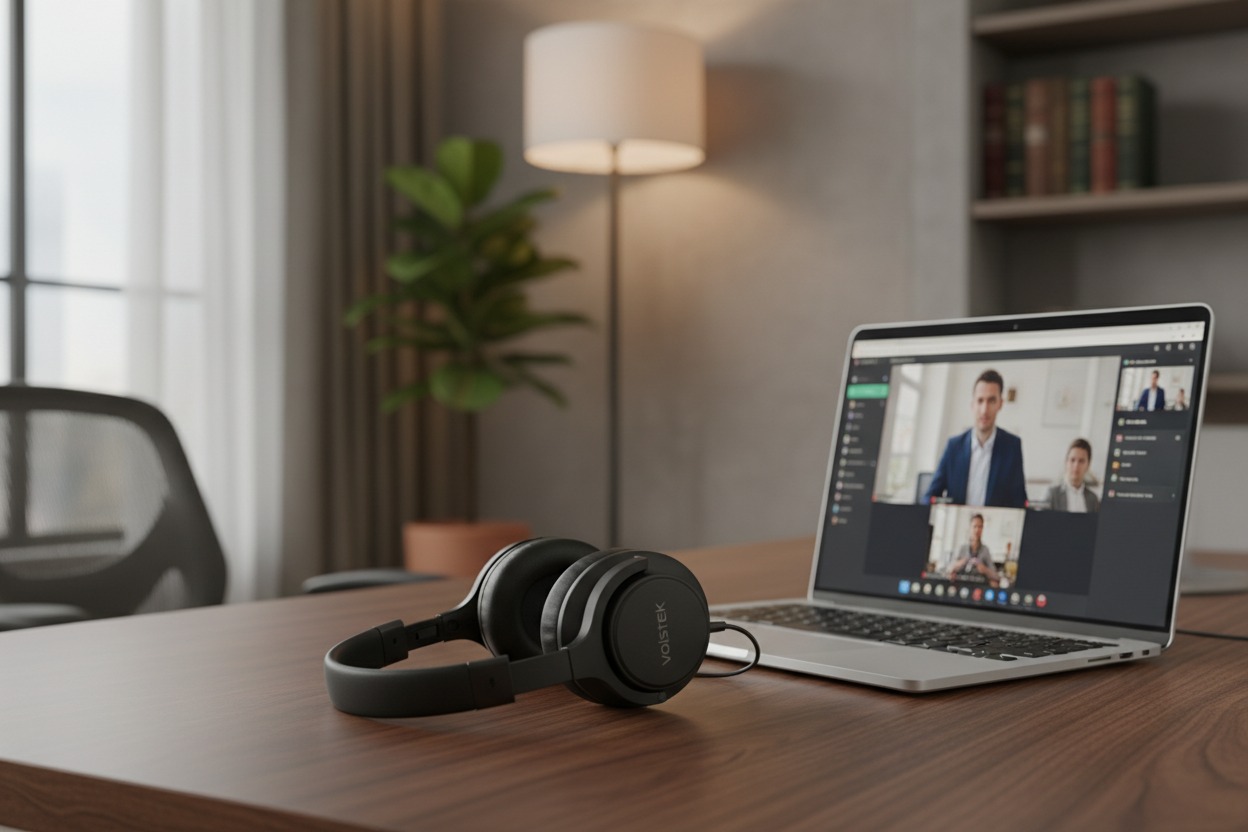

For guaranteed remote work success, must-have headphones are defined by three non-negotiable pillars: Advanced Active Noise Cancellation (ANC) to eliminate environmental distractions, broadcast-quality microphone systems with AI-powered voice isolation for professional clarity on calls, and all-day ergonomic comfort for sustained productivity. The leading models seamlessly integrate with unified communications platforms like Zoom and Microsoft Teams, offer multi-device connectivity via Bluetooth 5.3 or dedicated USB adapters, and provide 20+ hours of battery life. Investing in a purpose-built headset from established audio entities like Bose, Sony, Jabra, Sennheiser, or Poly is a direct investment in your focus, professional presence, and overall work-from-home efficacy.
Table of Contents
- 1 The Critical Role of Audio in the Modern Home Office
- 2 The Foundational Pillars: Core Technologies Defining Excellence
- 3 Top-Tier Categories & Market-Leading Entity Analysis
- 4 Decision Matrix: Aligning Headphone Choice with Workflow & Intent
- 5 Advanced Optimization: Beyond the Hardware
- 6 Comprehensive FAQ: Addressing Core User Queries
- 6.1 Can I effectively use a gaming headset for professional remote work?
- 6.2 Does Active Noise Cancellation (ANC) pose any health risks or cause discomfort?
- 6.3 How critical is a busy light or mute status indicator on a professional headset?
- 6.4 What has a greater impact on call quality: my headset’s microphone or my internet connection?
- 6.5 Are there meaningful audio quality differences between Bluetooth and a USB dongle?
- 7 Architecting Your Auditory Workspace for Long-Term Success
The Critical Role of Audio in the Modern Home Office
The transformation to a hybrid and remote work model, accelerated by global shifts and sustained by 2026 workforce trends, has fundamentally changed our definition of a professional environment. No longer confined to sound-dampened cubicles or dedicated office spaces, today’s professional must architect their own zone of productivity amidst the variable acoustics of home life. In this context, audio equipment transitions from a peripheral accessory to a centralized command center for your professional presence.6The right pair of headphones is a multifaceted tool: it is a focus-enhancing barrier against ambient noise, a voice-transmission system that defines how colleagues and clients perceive you, and a psychological signal that demarcates work time from personal time. According to a 2023 study published in the Journal of Applied Psychology, uncontrolled ambient noise in remote settings can lead to a 40% increase in cognitive load, directly impairing decision-making and creative output. Conversely, high-fidelity audio equipment correlates with higher perceived competence and engagement in virtual meetings. This guide provides a comprehensive, entity-driven framework for selecting the best headphones for remote work, ensuring your investment directly catalyzes success in the distributed workforce.
The Foundational Pillars: Core Technologies Defining Excellence
When deconstructing the best noise cancelling headset with mic for working from home, several interdependent technologies form the foundation. Understanding these entities and their relationships is key to making an informed choice.
1. Active Noise Cancellation (ANC): The Science of Silence
Active Noise Cancellation is the premier technology for creating a controllable auditory environment. It operates on the principle of destructive interference, using onboard microphones and a digital signal processor (DSP) to generate sound waves that are the exact inverse of ambient noise.
- How It Works & Key Entities: External feedback microphones capture environmental sound (e.g., traffic, HVAC, household chatter). The ANC processor (a chipset from suppliers like Qualcomm with its QCC series) analyzes this input in real-time and instructs the speaker drivers to produce an anti-noise wave. Leading implementations, such as Sony’s HD Noise Canceling Processor QN1 or Bose’s Custom ANC Chips, offer adjustable levels, often managed via a companion smartphone app.
- Transparency/Awareness Mode: This critical companion feature uses the same external mics to selectively pipe in environmental sounds. This is essential for situational awareness—hearing a doorbell, a child, or a colleague speaking to you in a hybrid office—without removing the headset. The sophistication of this mode is a key differentiator between consumer and professional-grade models.
2. Microphone Systems: Engineering Your Professional Voice
Your microphone is your avatar in the digital workspace. The best wireless headset for working from home employs an array of technologies to ensure your voice is transmitted with studio-like clarity.
- Beamforming Microphone Arrays: Unlike a single omnidirectional mic, an array of MEMS (Micro-Electro-Mechanical Systems) microphones uses algorithms to create a focused “beam” of sensitivity directed at your mouth. This physically rejects sound from other directions, such as a keyboard or a window.
- AI-Powered Voice Isolation: This is the cutting edge. Companies like Jabra (with Jabra Advanced Call Clarity) and Sennheiser (via partnerships with Sonova) deploy machine learning models trained on millions of voice and noise samples. These algorithms can distinguish a human voice from a dog bark, dish clatter, or keystrokes, removing the latter in real-time before transmission to platforms like Microsoft Teams or Zoom.
- Acoustic Fence Technology: Pioneered by Poly, this feature defines a virtual bubble around the user’s head, typically a 12-inch radius. Sounds originating from outside this bubble are automatically attenuated.
3. Connectivity Ecosystem: The Nerve Center of Workflow
Reliable, low-latency connectivity is the unsung hero of remote work audio.
- Bluetooth 5.3 & LE Audio: The latest Bluetooth standard offers improved stability, range, and power efficiency. The emerging LC3 codec (part of LE Audio) promises higher quality audio at lower bitrates, beneficial for both voice and media.
- Dedicated USB Adapters (Dongles): For a guaranteed, high-fidelity connection, a USB-A or USB-C adapter like the Jabra Link 380 or Sony WF-1000XM5 USB is superior to standard Bluetooth. It creates a secure, encrypted wireless link with near-zero latency, eliminating audio-video sync issues on calls and ensuring unified communications (UC) platform compatibility.
- Multi-Point Pairing: This allows simultaneous connection to two source devices—crucial for seamlessly switching between a work laptop running Google Meet and a smartphone for personal calls or music.
4. Ergonomic Design & All-Day Comfort
Comfort is a performance feature. Discomfort leads to distraction, necessitating a break in workflow.
- Materials Science: Look for memory foam ear cushions covered in protein leather (for noise isolation) or velour (for breathability). Headband design should distribute weight evenly.
- Clamping Force & Weight: A clamping force of 3-5 Newtons is ideal for secure fit without pressure. Premium models strive for a weight under 300 grams.
- Thermal Management: Over-ear designs must manage heat and moisture buildup over 8+ hours. Some models incorporate wicking materials or acoustic mesh to improve airflow.
Top-Tier Categories & Market-Leading Entity Analysis
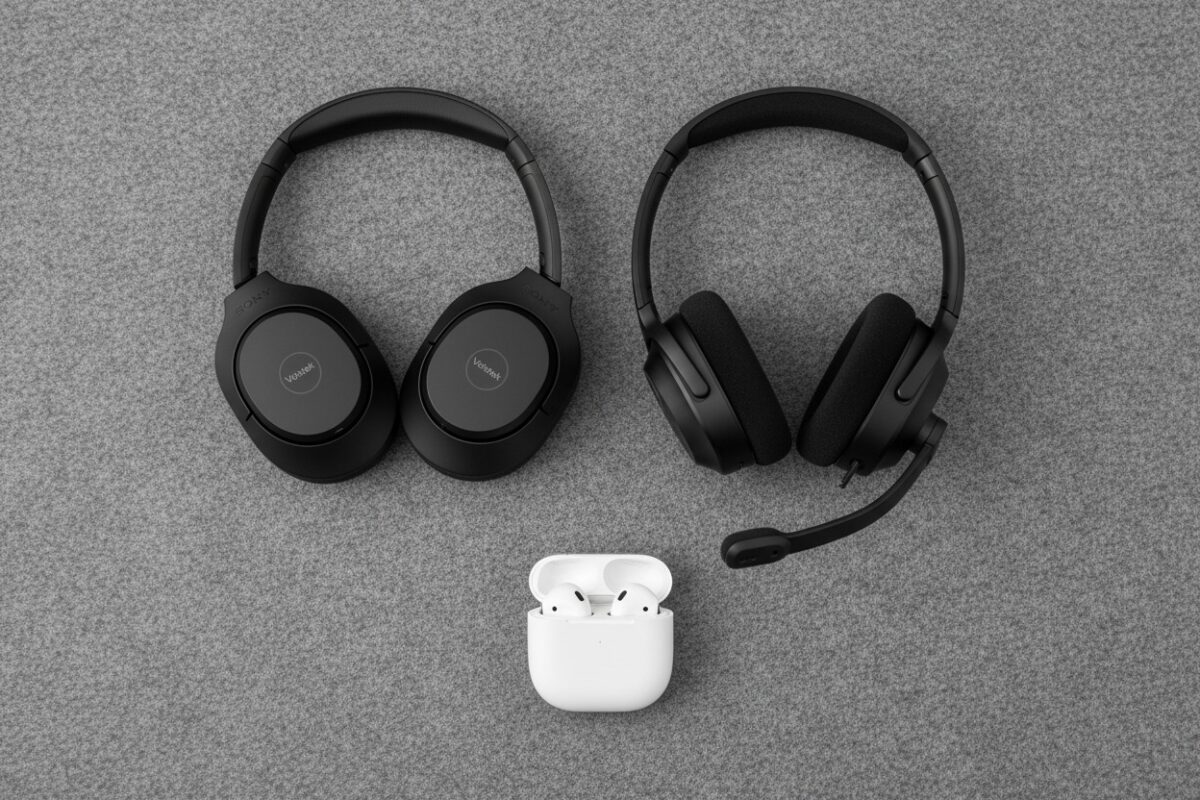
The market segments into distinct categories, each with flagship entities optimized for specific remote work profiles.
Premium Over-Ear ANC Headphones
- Primary Relationship: Optimized for Deep Focus & Immersive Audio Fidelity.
- Key Entities & Attributes:
- Sony WH-1000XM5: Features the Integrated Processor V1, 8 microphones for ANC/calling, and 30-hour battery. Renowned for best-in-class ANC and sound quality.
- Bose QuietComfort Ultra Headphones: Leverages Bose Immersive Audio for spatial sound in music and calls, with CustomTune technology that calibrates ANC and sound to your ear in real-time.
- Apple AirPods Max: Deeply integrated with the Apple ecosystem (iPhone, Mac), offering seamless device switching and spatial audio with dynamic head tracking for an immersive media experience.
- Best For: Professionals who prioritize blocking out noisy environments and enjoy high-quality music during work breaks.
Dedicated Unified Communications (UC) Headsets
- Primary Relationship: Engineered for Professional Voice Communication & Platform Integration.
- Key Entities & Attributes:
- Jabra Evolve2 75: A benchmark with 10-microphone array, Jabra Advanced Call Clarity, and a busy light for visual “do not disturb” signaling. Officially certified for Microsoft Teams, Zoom, and Cisco Webex.
- Sennheiser MB 660 UC: Offers adaptive ANC, TeamConnect microphone technology for crystal-clear speech, and TruVoicemicrophone for lifelike voice reproduction.
- Poly Voyager 4320 UC: Features Poly Acoustic Fence and Poly NoiseBlockAI for superior noise rejection, with a signature multifunctional boom arm.
- Best For: Knowledge workers in back-to-back video conferences where microphone performance and platform reliability are paramount.
Versatile True Wireless Earbuds
- Primary Relationship: Designed for Mobility, Discretion, & Hybrid Flexibility.
- Key Entities & Attributes:
- Jabra Elite 10: Offers Jabra Comfort Seal technology, Hybrid ANC, and 6-mic call technology with wind protection. Dolby Atmos with head tracking support.
- Apple AirPods Pro (2nd Gen): Features the H2 chip for enhanced ANC and transparency mode, personalized spatial audio, and seamless integration within the Apple ecosystem.
- Bose QuietComfort Earbuds II: Utilizes CustomTune sound calibration and ActiveSense noise management for a tailored listening experience.
- Best For: Professionals who value portability, work in warmer environments, or transition frequently between home office, coworking spaces, and travel.
Decision Matrix: Aligning Headphone Choice with Workflow & Intent
Your specific remote work patterns should dictate your selection. This matrix maps user intent to optimal product attributes.
| Primary User Intent & Scenario | Recommended Category | Critical Feature Priority | Exemplar Model | Supporting Entities |
|---|---|---|---|---|
| “I need absolute silence for deep, focused work.” | Premium Over-Ear ANC | 1. ANC Performance 2. Sound Quality 3. Long Battery Life | Sony WH-1000XM5 | Digital Signal Processor, Passive Isolation, Hi-Res Audio Codecs |
| “My day is 6+ hours of video calls.” | Dedicated UC Headset | 1. Microphone Clarity & Noise Rejection 2. All-Day Comfort 3. UC Platform Certification | Jabra Evolve2 75 | AI Noise Cancellation, Busy Light, Boom Mic, Microsoft Teams |
| “I’m mobile, hybrid, and need one device for work and life.” | Versatile TWS Earbuds | 1. Portability & Case Charging 2. Multi-Point Connectivity 3. Good ANC/Mic Balance | Apple AirPods Pro (2nd Gen) | Bluetooth 5.3, Wireless Charging Case, Transparency Mode |
| “I need professional audio on a constrained budget.” | Value-Oriented UC/ANC | 1. Core ANC Functionality 2. Reliable Clear Mic 3. Build Durability | Anker Soundcore Space Q45 | LDAC Codec, 40mm Drivers, Foldable Design |
Advanced Optimization: Beyond the Hardware
Owning a superior headset is the first step. Maximizing its potential requires strategic setup and software management.
- Firmware Updates: Regularly update your device’s firmware via the manufacturer’s app (e.g., Sony Headphones Connect, Bose Music App). These updates often deliver meaningful improvements to ANC algorithms, microphone performance, and battery management.
- Companion App Configuration: Dive into the settings. Customize your equalizer (EQ) for voice or music preference, adjust the level of ANC/transparency, and remap touch or button controls to your most-used functions.
- Acoustic Environment Setup: For critical calls, choose a quiet, carpeted room with soft furnishings to minimize echo. Position yourself away from loud appliances like HVAC vents or refrigerators.
- Software Integration: Ensure your headset is set as the default communication device in your computer’s Sound Settings (Windows) or Audio MIDI Setup (macOS). Within Zoom or Teams, manually select your headset’s microphone and speakers for guaranteed use.
Comprehensive FAQ: Addressing Core User Queries
Can I effectively use a gaming headset for professional remote work?
Does Active Noise Cancellation (ANC) pose any health risks or cause discomfort?
How critical is a busy light or mute status indicator on a professional headset?
What has a greater impact on call quality: my headset’s microphone or my internet connection?
Are there meaningful audio quality differences between Bluetooth and a USB dongle?
Architecting Your Auditory Workspace for Long-Term Success
Selecting the must-have headphones for remote work success is a strategic decision with compounding returns on your productivity, professional image, and personal well-being. In the evolving landscape of distributed work, your audio gear is a foundational pillar of your home office infrastructure.
The optimal choice is not merely about a brand name, but about a precise alignment between advanced acoustic technologies—ANC, AI-enhanced microphones, lossless connectivity—and your unique workflow demands. Whether you require the immersive silence of Sony’s industry-leading noise cancellation, the call-centric engineering and platform-native design of a Jabra UC headset, or the seamless ecosystem integration of Apple products, you are making a direct investment in your capacity to focus, communicate, and perform.
By applying the framework outlined in this guide—prioritizing core features, understanding entity relationships, and optimizing your setup—you transform a simple audio device into the cornerstone of a professional, distraction-free, and highly effective remote work environment. In the currency of modern work, clear communication and deep focus are invaluable; the right headphones are the tool that unlocks both.
“Find Which Voistek Model Has the Tech You Just Learned About”
You now understand ANC processors, beamforming mic arrays, AI voice isolation, and acoustic fence technology. But which Voistek headset actually delivers these features? We’ve mapped every technology mentioned in this guide to our product line—so you can match your newfound expertise to the perfect model.