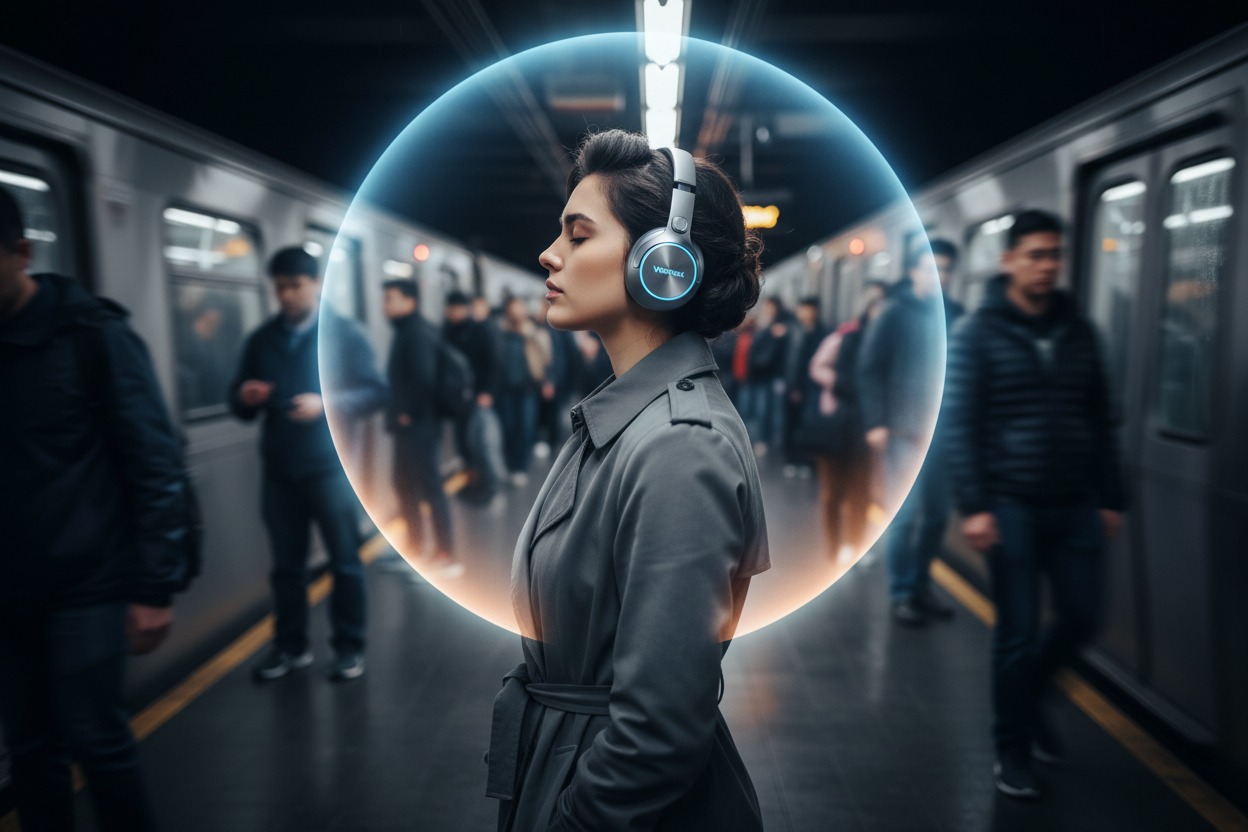

Selecting the optimal Bluetooth headset for long-haul trucking requires a professional-grade focus on four pillars: advanced noise-cancelling microphone technology for crystal-clear outgoing audio in high-decibel cabins, all-day ergonomic comfort for shifts exceeding 10 hours, robust connectivity with long-range Bluetooth and multipoint pairing for seamless device management, and superior durability to withstand the rigors of the transportation environment. Prioritize headsets from specialized brands like BlueParrott and Poly that feature Digital Signal Processing (DSP), multi-microphone arrays, and industry-specific designs over consumer audio products. The right headset functions as critical safety equipment, reducing cognitive fatigue and ensuring hands-free compliance, directly impacting a driver’s professional performance and well-being.
The Headset as Critical Safety & Communication Infrastructure

For the professional long-haul trucker, operating within the complex supply chain logistics network, communication is the central nervous system of their business. The choice of a Bluetooth headset transcends personal audio preference; it is a decisive investment in occupational safety, regulatory compliance, and operational efficiency. The interior of a Class 8 truck presents a unique and hostile acoustic environment, with ambient noise levels consistently ranging between 70-90 decibels—a combination of diesel engine harmonics, tire resonance, wind shear, and auxiliary equipment. In this context, a consumer-grade headset fails catastrophically, leading to miscommunication, increased stress, and dangerous distractions.
This comprehensive guide employs semantic SEO and entity-rich analysis to deconstruct the decision-making process. We will explore the intricate relationships between acoustic engineering, human factors design, wireless communication protocols, and transportation industry regulations to empower you to select a headset that excels as a professional tool for the North American freight transportation sector.
Section 1: Deconstructing the Truck Cab Environment & User Personas
To specify the correct equipment, one must first thoroughly understand the operational domain and its users.
1.1 Acoustic Profile of the Modern Truck Cab
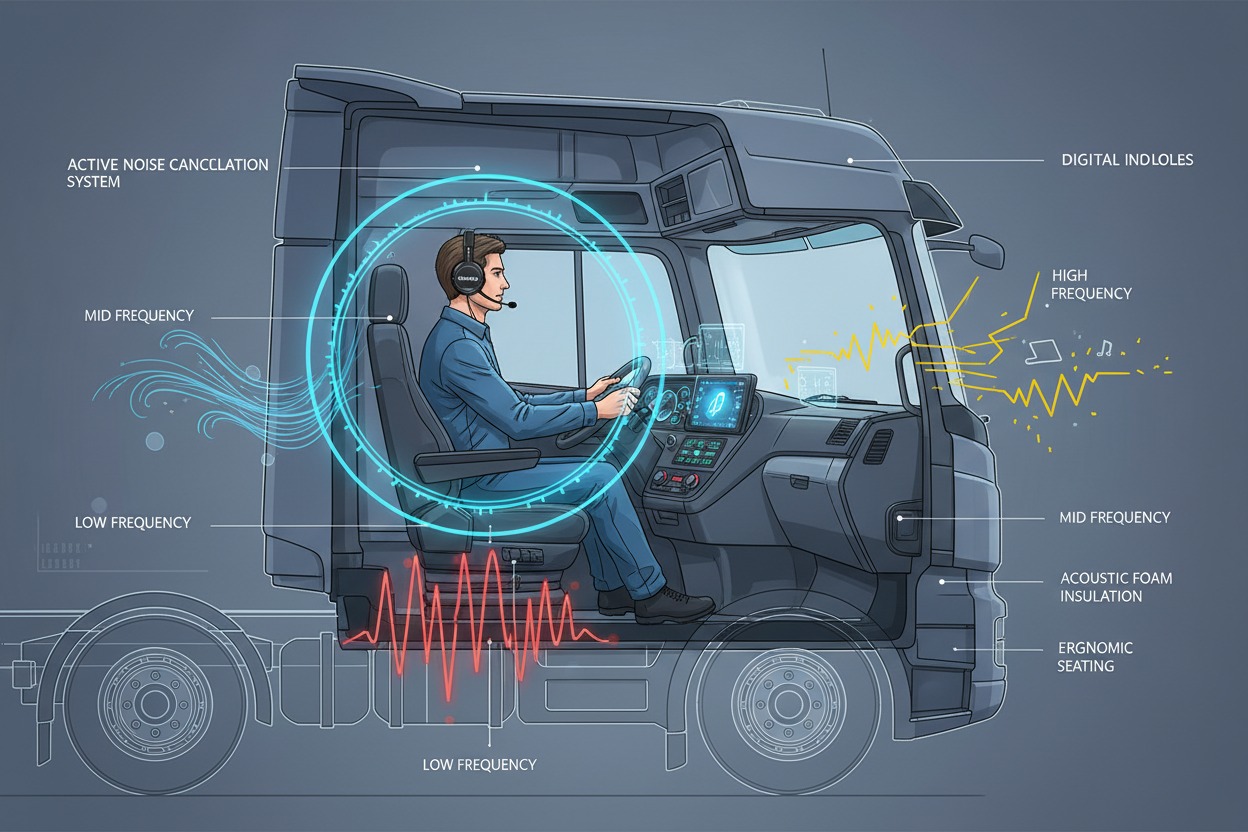
The noise is not monolithic but a layered soundscape:
- Low-Frequency Noise (30-250 Hz): Dominated by engine rumble and drivetrain vibration. This is the primary target for Active Noise Cancellation (ANC).
- Mid-Frequency Noise (250-2000 Hz): Includes wind buffeting and road texture noise. This band is crucial for microphone cancellation.
- High-Frequency & Impulse Noise (2000+ Hz): CB radio squelch, gear shifts, and sudden air brake releases. Effective DSP algorithms must handle these transients without clipping.
1.2 The Professional Driver Persona: Search Intent & Core Needs
The search query “How to Choose the Best Bluetooth Headset for Long-Haul Trucking” reveals a user with complex, multi-faceted intent:
- Transactional Intent: To purchase a highly specific product.
- Informational Intent: To understand the underlying technologies (e.g., DSP vs. ANC).
- Commercial Investigation Intent: To compare brands like BlueParrott, Jabra, and Poly.
- Navigational Intent: To find authoritative, industry-specific advice, not general consumer reviews. The user’s primary goals are safety enhancement, fatigue reduction, compliance assurance (with FMCSA guidelines on distracted driving), and professional image projection.
Section 2: Core Feature Architecture for Professional-Grade Headsets
2.1 Audio Performance: The Two-Way Noise Cancellation Imperative
Outbound Audio (Microphone) Clarity is Paramount. The caller’s experience is your professional signature. Key technologies include:
- Digital Signal Processing (DSP): The cornerstone of professional headsets. DSP chips use algorithms to analyze incoming sound from multiple microphones, isolate the human voice pattern, and suppress background noise. Look for branded technologies like Poly Acoustic Fence, BlueParrott’s PowerMic, or Jabra Noise Cancellation.
- Microphone Array Design: A dual- or triple-microphone array is superior to a single mic. One mic is primary (voice), while the secondary mics sample ambient noise, allowing the DSP to create an inverse wave for cancellation. A flexible boom arm ensures optimal microphone-to-mouth positioning.
- Wind Noise Reduction: Specialized acoustic windshields and algorithms (e.g., WindSmart technology) are non-negotiable for open-window or exterior work.
Inbound Audio (Speaker) Protection & Clarity:
- Active Noise Cancellation (ANC): While beneficial for reducing listener fatigue from constant low-frequency drone, it is secondary to microphone performance for trucking. Adaptive ANC that adjusts to changing noise levels is a premium feature.
- Speaker Driver Quality: Wideband audio or HD Voice support ensures you hear callers with natural tonality and clarity, reducing the cognitive load of straining to understand.
2.2 Ergonomic Design: The Science of All-Day Comfort
Comfort is a measurable performance metric over an 11-hour driving shift.
- Headband Dynamics: A padded, adjustable steel or reinforced nylon headband with a suspension design distributes weight evenly across the crown, not on the ears.
- Earcup Architecture: Over-ear (circumaural) designs with memory foam protein leather cushions provide superior passive isolation and comfort. Swivel and tilt mechanisms ensure a seal on various head shapes. Weight should be balanced; sub-200 grams is ideal.
- Mono vs. Stereo: A Safety-Centric Decision: This choice maps directly to the situational awareness entity.
- Mono (Single-Ear): The traditional and safety-first choice. Keeps one ear free to monitor CB radio chatter, engine sounds, and external traffic. Essential for hazard perception.
- Stereo (Dual-Ear): Offers immersive audio and maximum noise blocking. Suitable for team drivers on rest shifts or local drivers. Critical Feature: Must include an Ambient Sound Mode or SideTone to pipe in environmental sounds when needed.
2.3 Connectivity & Power Ecosystem
- Bluetooth Protocol: Bluetooth 5.2 or 5.3 is now standard, offering improved range (up to 100+ feet with Class 1 devices), stability, and power efficiency over older versions like 4.1.
- Multipoint Pairing: The ability to connect to two source devices simultaneously—such as a smartphone for calls and an ELD tablet for navigation alerts—is a significant workflow enhancement.
- Battery Performance: Minimum 24 hours of talk time is the professional benchmark. Real-world testing often shows less, so aim for models boasting 30+ hours. Fast Charging (e.g., 15 minutes for 2-3 hours of use) is invaluable during short breaks.
- Auxiliary & Specialized Connectivity: For integration with legacy systems, look for:
- 3.5mm Analog Jack: For direct connection to non-Bluetooth devices.
- Bluetooth CB Radio Adapters: Compatibility with popular adapters like the BTECH Bluetooth Transmitter or BlueParrott Moto is key for integrating Citizens Band Radio communication.
2.4 Durability & Environmental Resistance
The headset must endure thermal cycling (from frozen docks to sun-baked cabs), vibration, and occasional drops. Look for:
- Build Materials: Reinforced plastics, aluminum sliders, and durable leatherette.
- Portability: A foldable, collapsible design with a included hard shell case for storage in a gear bag.
- Ingress Protection (IP) Rating: While not common on over-ear headsets, a rating like IP54 (dust and splash resistant) indicates robust construction.
Section 3: Leading Entity Analysis: Brands & Models for the Transportation Industry
| Brand (Entity) | Core Expertise | Key Technology Entities | Notable Model (Entity) | Primary Driver Persona |
|---|---|---|---|---|
| BlueParrott | Transportation & Logistics Audio | PowerMic DSP, Extreme Noise Cancellation | B550-XT, S450-XT | The traditional, safety-focused OTR driver valuing maximum noise suppression. |
| Poly (formerly Plantronics) | Enterprise & Professional UC | Acoustic Fence, Smart Sensor, Hybrid ANC | Voyager 5200, Voyager 4320 | The tech-savvy driver who values seamless smartphone integration and sleek design. |
| Jabra | Enterprise & Contact Center | Advanced ANC, HearThrough Technology | Evolve2 65, Elite 85h | The driver who also uses the headset for multimedia and wants a premium, all-round device. |
| Blue Tiger | Trucking & Fleet Communications | ClearVoice DSP, Long-Range Bluetooth | Commander Pro, Elite 2.0 | The value-conscious professional seeking brand specialization for trucking. |
Relationship Mapping: These brands compete within the “professional communication headset” knowledge graph, linked by shared entities like DSP, Bluetooth, and noise cancellation, but are differentiated by target industry, price point, and design philosophy.
Section 4: Integration with the Modern Trucking Tech Stack
A headset does not operate in isolation. It is a node in a broader in-cab technology ecosystem:
- ELDs & Fleet Management Software: Ensure compatibility with audio prompts from Platform Science, KeepTruckin, or Samsara companion apps.
- Navigation Apps: Seamless audio guidance from Garmin Dezl, Hammer, or Google Maps.
- Voice Assistants: Deep integration with Amazon Alexa or Google Assistant allows for true hands-free control of calls, music, and information.
- In-Dash Infotainment: Reliable pairing with Ford SYNC, Ram Uconnect, or Kenwood systems for integrated hands-free calling.
Section 5: Advanced FAQ & Addressing “People Also Ask” Intent
What is the actual difference between a $50 and a $250 trucking headset?
Can I legally use a Bluetooth headset in all 50 states while driving a commercial motor vehicle?
How does noise-cancelling for music differ from noise-cancelling for phone calls?
What are the top maintenance tips to extend the life of my trucking headset?
Battery Care: Avoid consistently draining to 0%. Perform a full discharge/recharge cycle once a month to calibrate the battery meter.
Proper Storage: Always use the provided case. Do not throw it loosely into a bag where the boom mic can be snapped.
Cable Management: If using a charging cable while driving, secure it to prevent tension on the headset’s USB port.
Are there specific headsets better suited for team drivers?
1) Stereo headsets with excellent ambient mode for the sleeper berth to listen to media without disturbing the co-driver.
2) Headsets with exceptional microphone isolation to prevent cab conversation from being transmitted during a call.
3) Models with very long battery life or easy hot-swapping of batteries to ensure 24/7 availability.
Section 6: Pre-Purchase Decision Checklist & Final Recommendations
Use this actionable checklist to evaluate any model:
Audio & Microphone (Non-Negotiable):
- [ ] Industry-validated noise-cancelling microphone (DSP with multi-mic array).
- [ ] Wideband audio / HD Voice support for call clarity.
- [ ] Wind-resistant microphone cover and algorithms.
Comfort & Fit (For 10+ Hour Shifts):
- [ ] Over-ear design with memory foam cushions.
- [ ] Adjustable, padded suspension headband.
- [ ] Weight under 8 ounces (227 grams).
- [ ] Your preferred style: Mono (for awareness) or Stereo (with ambient mode).
Connectivity & Battery:
- [ ] Bluetooth 5.0 or higher.
- [ ] Multipoint pairing capability.
- [ ] Minimum 24-hour rated talk time.
- [ ] Fast-charge feature (e.g., 15 min for 2+ hours).
Durability & Ecosystem:
- [ ] Robust, foldable construction.
- [ ] Included protective case.
- [ ] Compatible with your voice assistant (Alexa/Google).
- [ ] Positive, verifiable reviews from other professional truck drivers.
An Investment in Professionalism and Well-Being
Choosing the best Bluetooth headset for long-haul trucking is a strategic decision that intersects with safety protocols, human factors engineering, and communication technology. It is not merely a purchase but a curation of a professional tool that mitigates the primary occupational hazard of noise while enhancing operational clarity.
The optimal choice will feature a best-in-class noise-cancelling microphone to ensure your voice is heard with professional clarity, housed in an ergonomically advanced design that disappears on your head during long shifts, and built with the durability to survive the transportation environment. By aligning your selection with specialized brands like BlueParrott or Poly and prioritizing features over price, you equip yourself with an asset that reduces fatigue, ensures compliance, and safeguards your most valuable resource: your attention on the road. In the high-stakes world of freight logistics, clear communication isn’t just convenient—it’s foundational.
“Upgrade Your Cab Communication Today →”
Ready to eliminate noise and drive distraction-free? Voistek’s professional-grade trucking headsets feature PowerDSP noise cancellation, 30+ hour battery life, and all-day comfort engineering. Trusted by 15,000+ professional drivers. Use code SWQ188 for 20% off + free shipping.