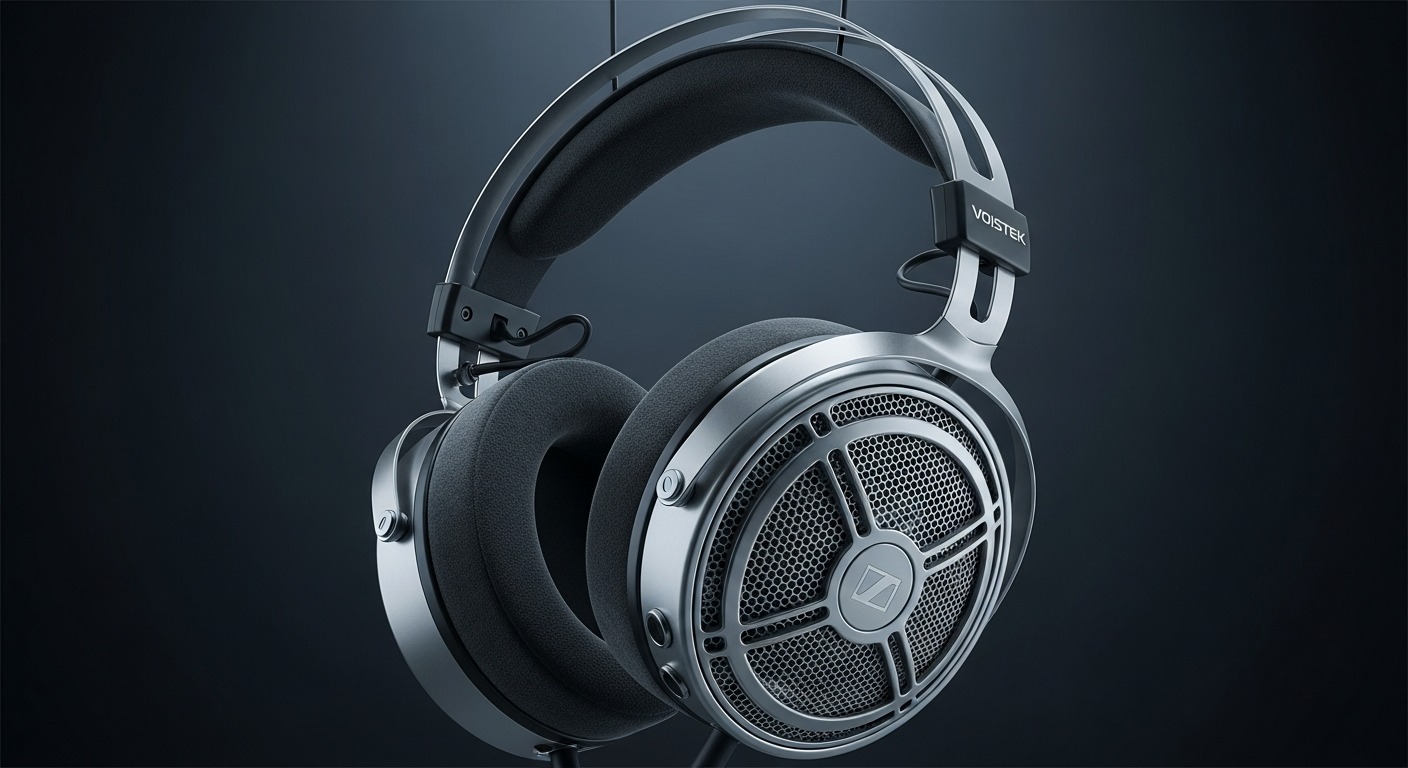

Open-back planar magnetic headphones pair a thin, electrically driven diaphragm with an earcup that allows sound to pass through its rear opening. This combination can deliver detailed sound and a spacious presentation in a quiet room, but performance varies by model. Because the cups leak sound and block little outside noise, they are usually a poor choice for commuting or shared spaces. Amplification needs depend on the headphone’s sensitivity, impedance, and the output of your source device.
Who Are Open-Back Planar Magnetic Headphones For?
Choose an open-back planar magnetic headphone if you listen mainly in a quiet room and want to compare spacious-sounding over-ear models. Start with fit and sound tuning, then check the source device’s power output. If you listen on public transport, in a shared office, or next to someone who needs quiet, a closed-back design will usually be more practical.
How Planar Magnetic Drivers Work

A headphone driver converts an electrical signal into sound. Planar magnetic and dynamic drivers do this differently, but neither design guarantees better sound on its own.
Dynamic Drivers vs. Planar Magnetic Drivers
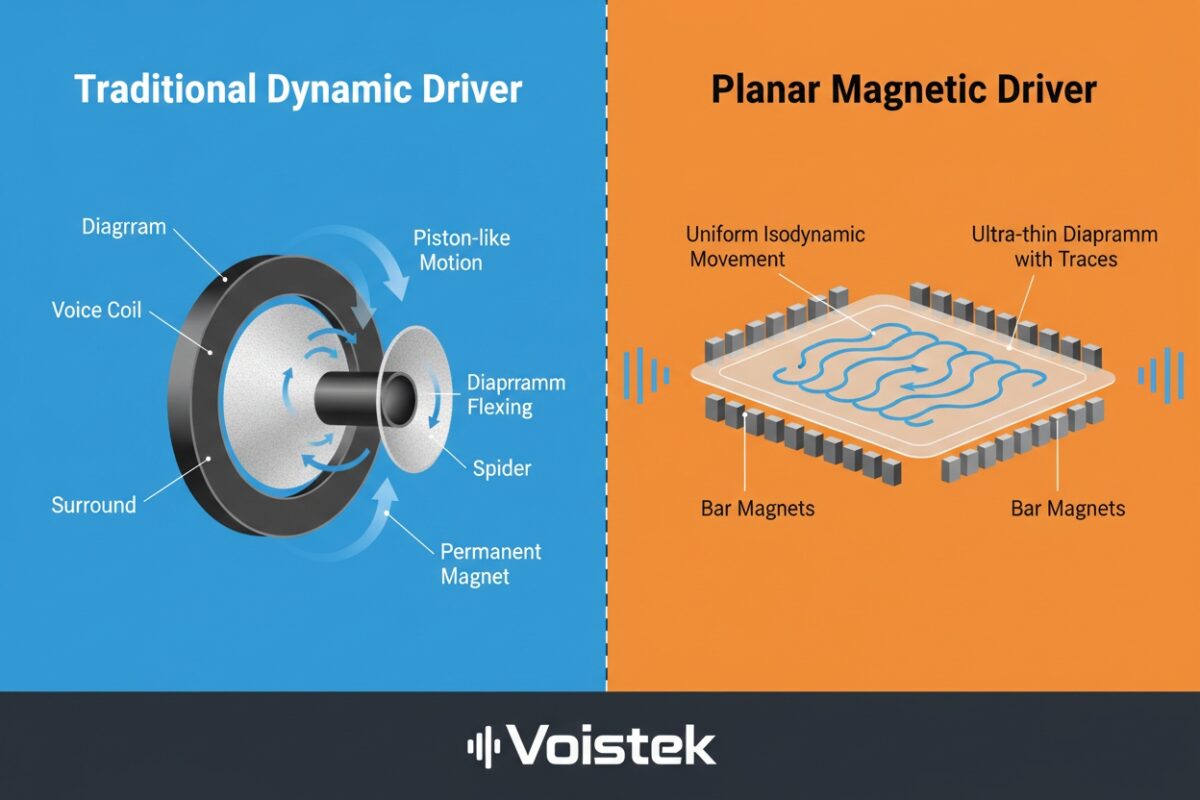
Many consumer headphones use dynamic drivers, which move a diaphragm using a voice coil in a magnetic field. The diaphragm’s material, shape, and suspension all affect its behavior. Some dynamic designs exhibit breakup or distortion at certain frequencies or volumes, but a well-engineered dynamic headphone can also provide excellent detail and low distortion. Driver type alone does not establish sound quality.
How a Planar Magnetic Driver Produces Sound
A planar magnetic driver (also called orthodynamic in some contexts) uses a thin diaphragm carrying conductive traces. The audio signal flows through those traces, and the magnetic field applies force across the diaphragm. Depending on the model, magnets may sit on one or both sides of the diaphragm. Diaphragm design, magnet geometry, and tuning all influence the result.
Current flowing through the conductive traces interacts with the magnetic field and moves the diaphragm to produce sound. Distributing the driving force across its surface can help control motion, although the outcome depends on the specific engineering. Practical advantages may include:
- Lower Distortion Potential: Distributed force can help reduce some forms of diaphragm distortion, but actual distortion depends on the model and listening level.
- Transient Behavior: A lightweight diaphragm with distributed driving force can respond precisely to changing signals. Perceived detail also depends on tuning, distortion, and the recording; driver type alone does not guarantee better instrument separation.
- Bass Extension: Some planar models reproduce low frequencies with little audible distortion. Bass extension and tonal balance still need to be evaluated for each headphone.
Driver performance depends on diaphragm construction, magnet geometry, conductive traces, and acoustic tuning. For example, Audeze describes its Uniforce diaphragm technology, while HIFIMAN describes its Stealth Magnet geometry. These are manufacturer-specific approaches, not features shared by every planar headphone.
How Open-Back Ear Cups Affect Sound
Planar magnetic describes the driver, while open-back describes the earcup enclosure. The two choices are independent: planar headphones can also be closed-back. An open grille changes how sound from the rear of the driver interacts with the cup and surrounding room.
Soundstage, Imaging, and Cup Resonances
Closed-back headphones enclose the rear of the driver to help limit sound leakage and external noise. Open-back headphones use grilles or perforations that let air and sound pass more freely. That design changes the acoustic loading and can reduce some cup resonances, although soundstage and tonal balance still depend on the complete headphone.
Depending on the headphone’s construction and tuning, an open-back design can offer these differences:
- Spacious Presentation: Some open-back models create a wider perceived soundstage. Accurate imaging still depends on the headphone’s frequency response, fit, and the recording; an open grille does not automatically recreate a loudspeaker setup.
- Different Cup Resonances: Open enclosures can reduce some reflections inside the rear cup. Timbre and tonal balance are not determined by the enclosure alone, so compare individual headphones with familiar tracks.
- Comfort During Long Sessions: Open cups may feel less enclosed to some listeners, but fatigue depends on fit, weight, clamp force, volume, and tuning as well as the earcup design.
Sound Leakage and Isolation: The Main Trade-Offs
Open-back headphones typically provide little passive isolation and allow sound to leak into the room. If privacy or background-noise control matters, compare the design with open-back and closed-back soundstage options before deciding. Open-back models may be impractical for:
- Noisy environments (offices, coffee shops)
- Public use (libraries, public transport)
- Situations where you need privacy or cannot disturb others (shared living spaces)
An open-back design often makes the most sense in a quiet home listening area. It is less practical when outside noise competes with music or when nearby people need quiet. Some listeners also use open-back headphones for mixing, but sound leakage makes them less suitable for tracking with a live microphone.
Open-Back Planar Magnetic Headphones: Pros and Cons
Compare the potential benefits with the trade-offs that matter in daily use: leakage, outside noise, weight, tuning, and amplifier requirements. A useful comparison should be between actual models rather than entire driver categories.
Potential Benefits of Open-Back Planar Headphones
- Detail and Clarity: Some planar designs reproduce subtle details cleanly, but a well-designed dynamic headphone can be just as revealing. Compare actual models rather than driver labels.
- Complex Musical Passages: Some models maintain clear separation in dense recordings. Tuning and fit matter as much as the diaphragm technology.
- Low-Frequency Response: Some planar headphones extend well into the bass with low distortion, although extension, balance, and impact vary by model.
- Open Presentation: An open-back enclosure can create a spacious listening experience. Soundstage width and imaging still depend on the headphone, recording, and listener.
Practical Limitations Before You Buy
- Amplification Requirements: Some planar headphones need more power than a phone or laptop can supply comfortably, while others can reach useful levels from portable devices. Check the specific model’s sensitivity, impedance, and recommended power rather than assuming every planar headphone requires a dedicated amplifier.
- Price and Value: Large drivers, magnets, and specialized construction can raise costs, but planar models exist at several price levels. Compare comfort, reliability, tuning, and return policies rather than assuming the most expensive model is the best.
- Weight and Fit: Some planar headphones are relatively heavy because of their magnet structures. Check the published weight, headband adjustment, pad space, and clamp force; a lightweight model can still feel uncomfortable if the fit is poor.
- Care and Maintenance: Follow the manufacturer’s handling and storage instructions. Check whether replacement pads and cables are available, since worn pads can change comfort and the sound you hear.
Planar Magnetic Headphone Brands and Model Examples
If you are comparing planar magnetic headphones, focus on the engineering and fit of individual models rather than assuming one brand has a fixed sound. This table summarizes common technologies and representative products; preferences still depend on the specific headphone.
| Brand | Brand Base | Technology / Design | Model Examples | What to Compare |
|---|---|---|---|---|
| Audeze | USA | Nano-Scale Diaphragm, Fluxor Magnets, Fazor Waveguides | LCD-X, MM-500 | Bass balance, comfort, weight, and power needs vary by model. |
| HIFIMAN | China | Stealth Magnets, Thin Diaphragm Design, Suspension Headband | HE1000 Stealth, Arya Organic | Treble tuning, pad fit, and perceived soundstage vary by model. |
| Dan Clark Audio | USA | V-Planar Diaphragm, TrueFlow Motor Optimization, Ultra-Light Weight | Aeon 2 Open, Expanse | Comfort, tuning, and source power needs differ across models. |
| Abyss Headphones | USA | Diaphragm Tensioning System, Massive Magnet Arrays | AB-1266 Phi TC | Fit adjustment, weight, and amplification deserve close attention. |
| Sendy Audio | China | Composite Planar Diaphragms, Wooden Ear Cups | Apollo, Peacock | Pad comfort, finish, and tonal balance vary by model. |
Other models to research: Fostex has a long history with its T50RP series, Monoprice offers Monolith-branded planar headphones, and HIFIMAN’s Sundara is another established comparison point. Check whether a particular version is open-back before making a shortlist.
Amplifiers, Audio Sources, and Accessories
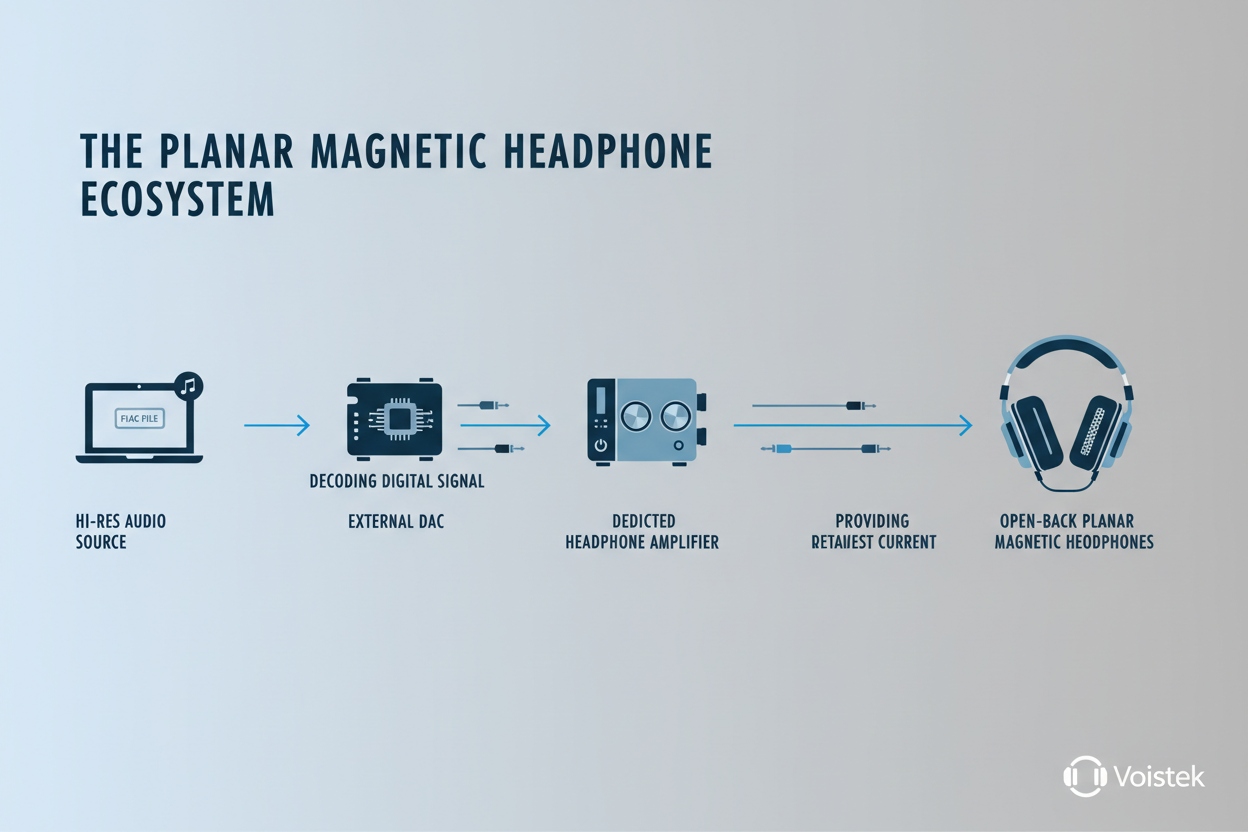
A planar magnetic headphone can work with a simple source or a dedicated audio setup. The right choice depends on its power requirements and the features you need, not the driver category alone.
1. When Do You Need a Headphone Amplifier?
Start with the headphone manufacturer’s sensitivity, impedance, and recommended power figures. Then compare them with the amplifier or device you already own. Consider these specifications:
- Power Output: Compare your source device’s output at the headphone’s impedance with the manufacturer’s recommendation. For example, the Audeze MM-100 specifications list 18-ohm impedance, 98 dB/1 mW sensitivity (at Drum Reference Point), and a recommended power level above 250 mW. These are MM-100 figures, not requirements for all planar headphones.
- Low Output Impedance: Check that the amplifier’s output impedance is suitably low relative to the headphone’s impedance, without assuming every setup needs a specific sub-1-ohm figure.
- Choosing an Amplifier: Check the required input connection, output power at your headphone’s impedance, and usable volume range. An external amplifier makes sense if your existing source cannot meet the model’s needs; brand names or price alone are not a reliable guide.
2. Choosing an Audio Source
A clean recording and an adequately powered source matter more than expensive accessories. Compare the practical differences you can hear rather than assuming a costlier digital-to-analog converter will always improve playback.
- Audio Files: FLAC, ALAC, and WAV preserve the source without lossy compression, but a well-encoded lossy file can also sound very good. Start with a good recording and a suitable listening level before paying for higher-resolution formats.
- Streaming Services: Look for the lossless playback options and device compatibility currently offered by services such as Tidal, Qobuz, or Apple Music; plan names and formats can change.
- The DAC (Digital-to-Analog Converter): An external DAC may help if your current device has audible noise, insufficient output, or missing connections. An adequately designed built-in DAC does not automatically need replacement.
3. Fit, Listening Space, and Cables
- Listening Environment: A quiet room lets you hear more of the recording without raising the volume to compete with outside noise. Open-back cups also allow nearby people to hear some of your audio.
- Cables: Use a compatible cable with secure connectors and enough length for your setup. Aftermarket cables may improve durability or handling, but price alone does not establish an audible sound-quality improvement.
Frequently Asked Questions
Are open-back planar magnetic headphones good for gaming?
These headphones can work well for gaming in a quiet room. Open-back designs may provide a spacious presentation, but imaging depends on the specific model. Sound leakage can also reach a nearby microphone, so consider your environment and setup.
What is the difference between planar magnetic and electrostatic headphones (like STAX)?
Planar magnetic headphones move a traced diaphragm using a magnetic field. Electrostatic headphones move an electrically charged diaphragm between stators and require a compatible energizer. Neither approach is universally better; compare tuning, price, comfort, and equipment needs.
Can I use these without an amplifier?
Sometimes. Compare the headphone’s sensitivity, impedance, and recommended power with your phone, laptop, or interface. A suitable amplifier can help if your device cannot provide clean output at the volume you need, but it is not mandatory for every planar model.
How do they compare to high-end dynamic driver headphones (like Sennheiser HD 800 S or Focal Utopia)?
Both technologies can produce detailed, spacious sound. Some planar models offer low distortion and strong bass extension, while well-designed dynamic headphones can also offer excellent imaging and punch. Compare specific models at matched listening levels.
What should I listen for when auditioning planar magnetic headphones?
Use familiar tracks to assess bass balance, vocal clarity, instrument separation, and treble comfort. Check fit, weight, and clamping pressure over a realistic session, and make sure sound leakage will not disturb others.
How to Choose the Right Pair
Open-back planar magnetic headphones are worth auditioning if you listen in a quiet room and do not need isolation. Prioritize the sound and comfort of individual models; power requirements, weight, and fit can differ considerably.
Who should buy them?
- Home listeners who want to compare spacious, detailed sound without assuming planar drivers are automatically superior.
- People with a quiet listening space who can accept sound leakage.
- Audio editors or mixers considering a model with suitable tuning and documented performance for their workflow.
- Listeners willing to compare comfort, source compatibility, and tuning before choosing a specific model.
Who should avoid them?
- Those who primarily listen in noisy environments or on the go.
- Listeners whose existing source cannot adequately drive their chosen model and who do not want to change equipment.
- Anyone who needs sound isolation for privacy or to avoid disturbing others.
Practical recommendation: Start with your listening environment and budget. Compare comfort, tonal balance, and manufacturer power specifications before spending extra on an amplifier. If possible, audition planar magnetic and dynamic models at similar volume levels. The right headphone is the one that fits your needs, not simply the one with a more specialized driver.
Listening Checklist Before You Buy
Make a shortlist only after checking your room, source device, comfort preferences, and whether sound leakage will disturb anyone nearby.
If you have an opportunity to audition headphones, compare familiar music at similar volume levels and check the following:
- Compare at matched volume: Use the same familiar tracks and keep playback levels similar so louder audio is not mistaken for better quality.
- Check comfort: Wear each model long enough to notice weight, clamp force, pad pressure, and headband adjustment.
- Check your source: Verify the cable connector, headphone impedance, sensitivity, and any recommended power before buying an amplifier.
- Check your room: Make sure outside noise and sound leakage are acceptable where you actually plan to listen.