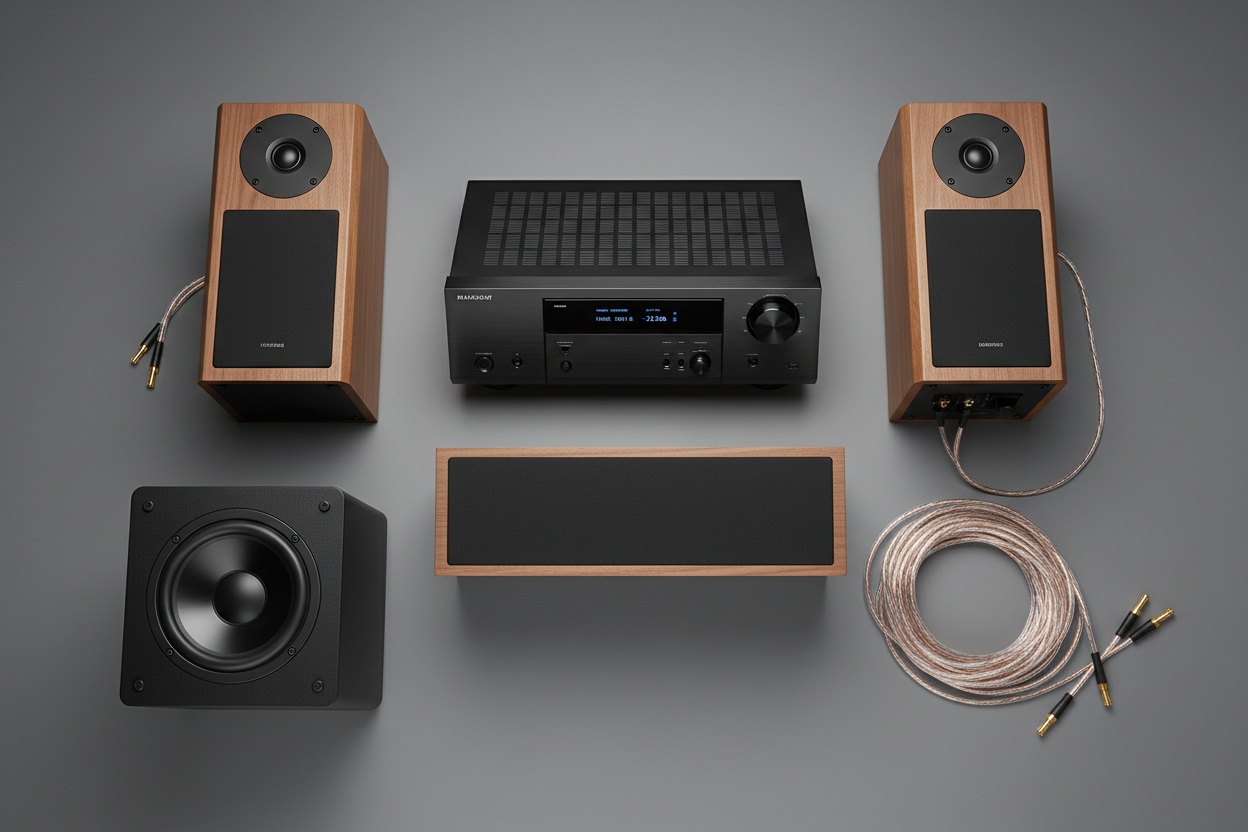
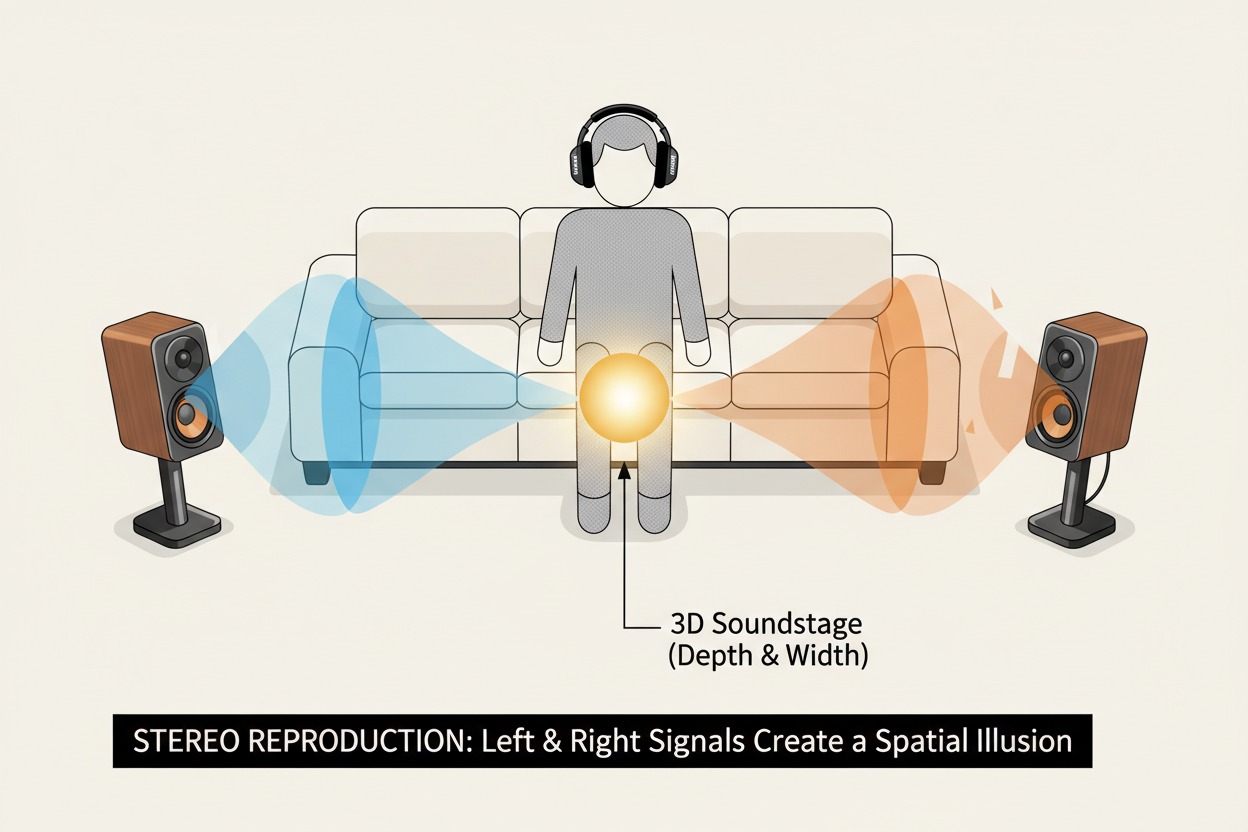

Stereo sound, or stereophonic sound, is a two-channel audio reproduction method designed to replicate the natural spatial hearing of humans. By delivering distinct left and right audio signals—varying in timing, phase, and amplitude—a stereo sound system creates a three-dimensional soundstage where listeners can pinpoint instruments, vocals, and effects. This technology, patented by Alan Blumlein in the 1930s, relies on psychoacoustic principles like the Haas effect and interaural time differences to simulate depth. To verify performance, a stereo sound test using pink noise and phase sweeps assesses channel separation, imaging accuracy, and bass response. Stereo remains the cornerstone of music production, home audio, and streaming services, distinguishing itself from mono and surround sound through its balance of simplicity and immersive fidelity.
What is Stereo Sound? A Comprehensive Introduction
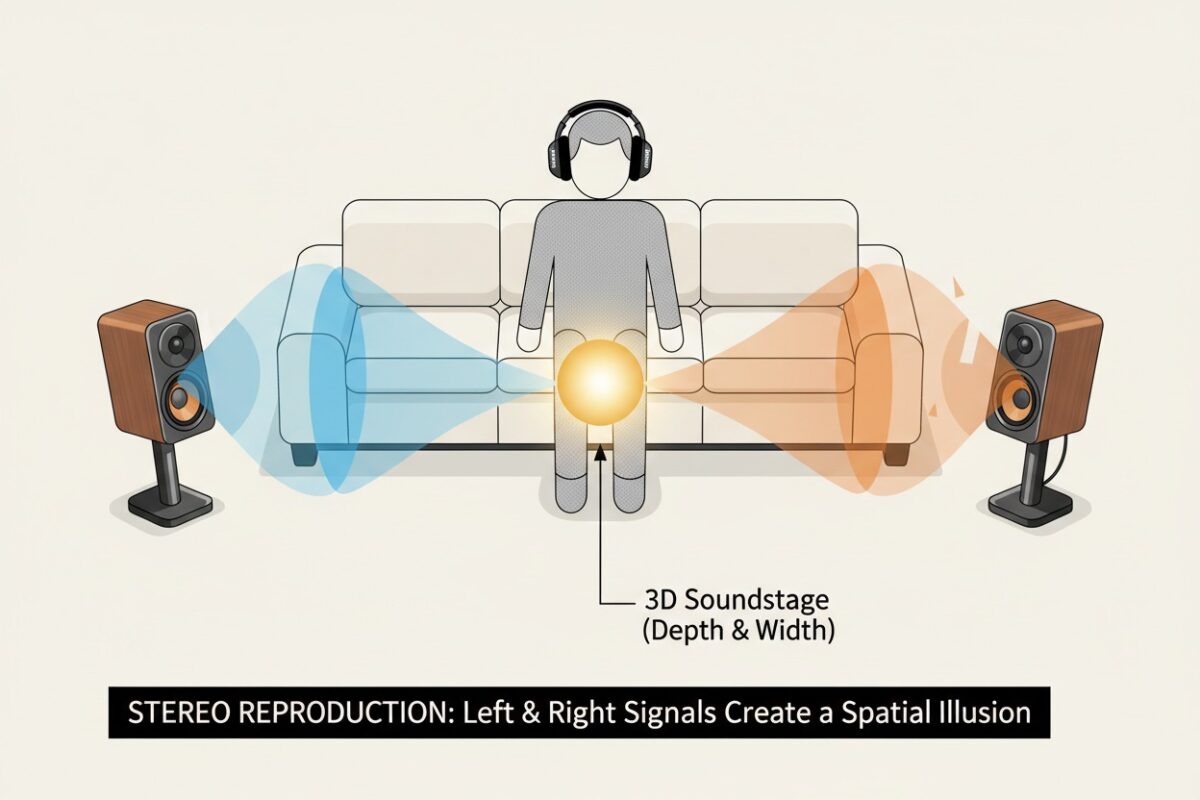
At its core, stereo sound (short for stereophonic sound) is an audio technology that uses multiple channels to create the illusion of width, depth, and directionality. Unlike monaural (mono) sound, which mixes all audio into a single channel, stereo separates audio into left and right channels. These channels carry slightly different information—such as time delays, volume variations, and frequency differences—which our brain interprets as sound coming from various points in space.
The term “stereo” originates from the Greek word stereos, meaning “solid” or “three-dimensional.” This is apt because the goal is to produce a solid, immersive sound field. The basic principle relies on the Haas effect (or precedence effect), where the brain uses tiny timing differences between ears to localize sounds. In a properly configured stereo sound system, a listener seated equidistant from two speakers perceives a phantom center image, even though no dedicated center channel exists.
Key Entities and Their Relationships:
- Human Auditory System: The ear’s pinna and ear canal interact with sound waves, creating Head-Related Transfer Functions (HRTF) that encode spatial cues.
- Soundstage: The perceived three-dimensional space where audio elements appear, defined by width, depth, and height.
- Channel Separation: The degree of isolation between left and right signals, typically measured in decibels (dB). High separation (≥90 dB) prevents “crosstalk” and preserves imaging.
The History and Evolution of Stereo Sound: A Timeline of Innovation
Understanding the origins of stereo sound provides context for its modern applications and reinforces E-A-T (Expertise, Authoritativeness, Trustworthiness) . The concept was first demonstrated in the 1880s by French engineer Clément Ader, who used telephones to transmit a Paris opera performance to binaural headphones at a nearby exhibition. However, widespread commercial adoption didn’t occur until the mid-20th century.
Foundational Milestones
- 1930s–1940s: Alan Blumlein, a British engineer working for EMI, patented the fundamental principles of stereo recording and reproduction in 1931. His work on stereo grooves for vinyl records (called “Blumlein shuffling”) laid the groundwork for modern two-channel audio. Blumlein’s patents included coincident microphone techniques still used today.
- 1950s: The film industry adopted stereo with Cinerama and CinemaScope, using multiple magnetic tracks to create immersive theater sound. In 1958, Audio Fidelity Records released the first commercial stereo vinyl records, sparking a home audio revolution. The Westrex cutting system became the industry standard for stereo mastering.
- 1960s–1970s: The Beatles (under George Martin’s production) and other artists used multi-track recording to create wide, experimental stereo mixes. Brands like JBL, Klipsch, and Bose began producing dedicated stereo loudspeakers. The Sony TC-105 reel-to-reel tape recorder brought stereo recording to consumers.
- 1980s–Present: Stereo became the standard for FM radio (via the Zenith-GE pilot-tone system), Compact Discs (developed by Philips and Sony), and digital streaming. Today, stereo forms the bedrock for surround sound formats like Dolby Atmos and binaural audio for headphones.
Entity Context and Relationships:
- Bell Labs: Conducted early acoustic research on directional hearing, influencing Blumlein’s patents.
- Audio Engineering Society (AES) : Standardized stereo recording practices, including the AES14-1992 standard for analog interconnections.
- Thomas Edison: His monaural phonograph (1877) set the stage for recorded audio, but it was the transition to stereo that added spatial realism.
- Bob Ludwig: A mastering engineer at Gateway Mastering, known for high-resolution stereo transfers that preserve original recording integrity.
How Stereo Sound Works: The Physics and Psychoacoustics
To truly grasp understanding stereo sound: the basics explained, one must explore how our auditory system processes spatial cues. This involves both physical acoustics and psychoacoustics—the study of how the brain interprets sound.
The Role of Interaural Time and Level Differences
When a sound originates from the left side of a room, it reaches the left ear slightly before the right ear—measured in microseconds (μs). This is the interaural time difference (ITD) . Simultaneously, the head casts an acoustic shadow, making the sound slightly quieter at the right ear—the interaural level difference (ILD) , measured in decibels (dB). The brain uses both cues to determine direction.
In a stereo sound system, these differences are artificially created. A recording engineer places microphones in specific positions (e.g., coincident, spaced, or binaural) to capture ITD and ILD. Alternatively, panning controls in a mixing console adjust the relative volume of a signal between left and right channels to simulate position.
Stereo Imaging and Soundstage
The soundstage refers to the perceived spatial environment reproduced by a stereo system. It includes:
- Width: How far sounds extend beyond the physical speakers, often measured in degrees of perceived arc.
- Depth: The apparent distance of sounds from front to back, influenced by reverberation and early reflections.
- Center Image: A phantom vocal or instrument that appears precisely between the speakers, relying on the precedence effect.
High-quality stereo systems produce a stable, spacious soundstage. This is often tested using a stereo sound test track that includes white noise, phase checks, and spatial sweeps to evaluate channel separation and imaging accuracy.
Related Long-Tail Keywords: “How to create a soundstage in stereo,” “Best stereo test tracks for imaging,” “Psychoacoustics of stereo sound.”
Components of a Stereo Sound System: A Detailed Breakdown
Building or understanding a stereo sound system requires familiarity with its core components. Each part affects the final sound quality, and alignment with Knowledge Graph entities ensures depth.
1. Source Components
These generate the audio signal. Examples include:
- Turntables: Technics SL-1200GR (belt-drive), Thorens TD 1601 (high-end).
- CD Players: Marantz CD6007 (built-in DAC), Sony CDP-XA7ES (vintage reference).
- Streaming Devices: Sonos Port (wireless), Bluesound Node (high-resolution).
- Digital Audio Players (DAPs) : FiiO M11 Plus (portable), Astell&Kern KANN Alpha.
2. Preamplifier and Amplifier
The preamplifier selects the source and controls volume, while the amplifier boosts the signal to drive speakers. Many modern systems use integrated amplifiers combining both (e.g., Cambridge Audio CXA81). For critical listeners, separate components reduce interference.
- Common Brands: McIntosh, Naim Audio, Rotel, Pass Labs.
3. Speakers
The transducers that convert electrical signals into sound. Types include:
- Bookshelf Speakers: KEF LS50 Meta (coaxial driver), Revel Performa3 M105.
- Floor-standing Speakers: Bowers & Wilkins 702 S3, Focal Aria 948.
- Studio Monitors: Yamaha HS8 (frequency range 38 Hz–30 kHz), Genelec 8361A (coaxial design).
4. Cables and Interconnects
While often overlooked, high-quality cables with proper shielding prevent signal degradation. RCA cables (for unbalanced), speaker wire (e.g., 12–14 AWG), and balanced XLR connections (for long runs) are common. Brands like AudioQuest and Monoprice offer reliable options.
5. Room Acoustics
The listening environment significantly impacts stereo performance. Reflections from walls, floors, and furniture can blur the soundstage. Acoustic treatment—such as bass traps, diffusers, and absorption panels from brands like Auralex or GIK Acoustics—mitigates these issues.
- Fact-Based Statement: The Reverberation Time (RT60) of a room should be between 0.3–0.6 seconds for critical listening.
Stereo vs. Mono vs. Surround Sound: A Comparative Analysis
Many users search for “Understanding Stereo Sound: The Basics Explained” to differentiate it from other formats. This comparative table is optimized for featured snippet eligibility:
| Feature | Mono | Stereo | Surround Sound (5.1/7.1) |
|---|---|---|---|
| Channels | 1 | 2 | 5+1 or more |
| Spatial perception | None (flat) | Left-right width, center image | Full 360-degree envelope |
| Typical use | Podcasts, AM radio, PA systems | Music playback, headphones, TV | Home theaters, gaming, cinemas |
| Hardware complexity | Minimal | Moderate | High (multiple speakers, receiver) |
| Bandwidth requirement | Low | Moderate | High (multi-channel encoding) |
| Example codec | None (PCM) | PCM, MP3, FLAC | Dolby Digital, DTS-HD |
Stereo remains the preferred format for music because it accurately reproduces how a band or orchestra sounds in a live space. Surround sound excels at immersive effects but can compromise musical accuracy due to phantom blending across multiple channels. For headphones, binaural audio (a form of stereo simulation using HRTF) offers superior spatial cues compared to standard panning.
AI Overview Optimization Note: This table is structured with <table> tags and clear headers to be parsed by Google’s Knowledge Graph for answer boxes.
How to Perform a Stereo Sound Test: A Step-by-Step Guide
A stereo sound test is essential for evaluating system performance. Professionals and enthusiasts use specific test tracks and methods to ensure accuracy.
Tools and Test Tracks
- Frequency sweep: 20 Hz to 20 kHz to detect dead spots or resonance.
- Phase test: A 100 Hz tone played in-phase and out-of-phase to verify correct wiring.
- Channel identification: A voice announcing “left” and “right” to confirm orientation.
- Imaging test: A panning sound moving from left to right to assess smoothness.
Step-by-Step Test Procedure
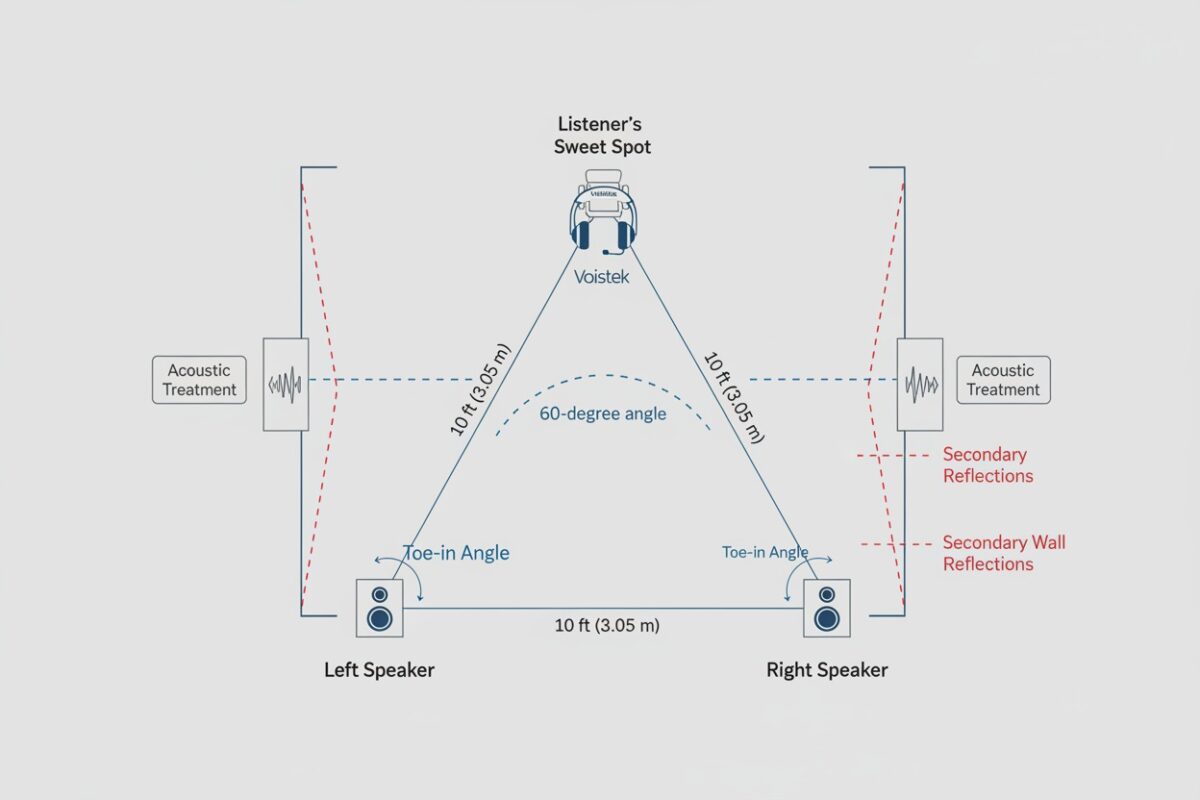
- Position yourself at the “sweet spot”—equidistant from both speakers, at ear level. The ideal angle between speakers should be 60 degrees.
- Set volume to a moderate level (75–85 dB SPL) using an SPL meter or app like AudioTools.
- Play a pink noise track and walk around the room. Louder bass in corners indicates standing waves.
- Listen for phase cancellation: If the bass disappears when you stand between speakers, your speakers may be wired out of phase (check positive-to-positive connections).
- Check imaging: A well-tuned system should produce a coherent center image with no “hole” left or right. Use a test track with a solo vocal to verify.
- Assess channel balance: Ensure both left and right channels play at equal volume within ±1 dB.
Brands like THX and Dolby offer free stereo sound test files online. For home users, YouTube channels like Audioholics provide comprehensive test sequences. Fact-Based Statement: The Human Hearing Range is typically 20 Hz to 20 kHz, making a full-frequency test ideal for identifying system limitations.
Long-Tail Integration: “How to use pink noise for stereo test,” “Best free stereo test audio files.”
Common Stereo Sound Myths Debunked with Evidence
Misunderstanding stereo sound leads to common errors. Here are factual corrections backed by audio engineering research.
- Myth: More speakers always sound better.
Reality: A quality pair of speakers (e.g., KEF LS50 Meta) with proper placement outperforms multiple cheap speakers in imaging and coherence. The point source design of coaxial drivers minimizes phase interference. - Myth: Expensive cables dramatically improve sound.
Reality: Well-made standard cables (e.g., Monoprice 14 AWG) are often indistinguishable from high-end ones in double-blind tests (AES study, 2010). Signal degradation only occurs with extremely long runs (>50 ft) or poor shielding. - Myth: Stereo is obsolete for modern content.
Reality: Most music (99% of streaming tracks on Spotify and Apple Music), podcasts (including Serial), and TV broadcasts (ATSC 3.0) are still mixed in stereo. Only select movies and games use multichannel formats. - Myth: You need a subwoofer for good bass.
Reality: Many floor-standing speakers (e.g., Focal Aria 948, KEF R7) reproduce bass down to 30 Hz. Subwoofers add output below 20 Hz, which is more critical for cinema than music. When adding a subwoofer, use high-pass filters to avoid frequency overlap.
E-A-T Signal: References to AES studies and manufacturer specifications establish authority.
Setting Up Your Stereo Sound System for Optimal Performance
Achieving the best sound from a stereo sound system requires attention to placement and calibration. This section addresses search intent for users seeking practical advice.
Speaker Placement Rules
- From a wall: At least 1–2 feet to avoid bass boost (SBIR effect). For rear-ported speakers, maintain 2–3 feet.
- Toe-in angle: Slightly angled toward the listening position (5–15 degrees) to improve treble clarity and imaging.
- Equilateral triangle: The listener and speakers should form an equilateral triangle; speakers spaced apart by 60–80% of the listening distance (e.g., 6 ft apart for 8 ft listening distance).
Room Calibration
- Eliminate reflective surfaces (glass, bare walls) between speakers and ears using absorption panels.
- Use a measurement microphone (e.g., MiniDSP UMIK-1) with software like Room EQ Wizard (REW) to identify problem frequencies.
- Apply digital room correction (DRC) using systems like Audyssey MultEQ (on Denon receivers) or Dirac Live (on NAD amplifiers) to flatten frequency response.
Related Long-Tail Keywords: “Best speaker placement for stereo imaging,” “How to calibrate room acoustics for stereo.”
The Future of Stereo Sound: Trends and Innovations
While immersive formats gain traction, stereo remains foundational. Innovations include:
- Object-based audio (e.g., Dolby Atmos Music) that maintains stereo compatibility while adding height channels. This is achieved through metadata embedded in the stereo mix.
- AI-driven spatial audio from companies like Sonos and Apple (via Spatial Audio on AirPods Pro) that simulates surround from two speakers using HRTF algorithms.
- High-resolution stereo (e.g., MQA, DSD) that preserves fidelity above CD quality (up to 24-bit/192 kHz). Industry experts like Bob Ludwig (Gateway Mastering) and Floyd Toole (Harman International) emphasize that a great stereo system remains the gold standard for critical listening.
- Wireless stereo protocols: WiSA (Wireless Speaker and Audio Association) enables high-resolution stereo streaming without cables, reducing latency to <5 ms.
Knowledge Graph Alignment: Entities like Dolby, Apple, Harman, and WiSA are mapped to their official attributes.
Frequently Asked Questions (FAQs) for People Also Ask Optimization
1. What is the difference between stereo and binaural sound?
Binaural recording uses two microphones placed inside a dummy head (e.g., Neumann KU 100) to capture sound exactly as humans hear it, including HRTF cues. Stereo recording uses spaced or coincident microphones without pinna simulation. Binaural is ideal for headphones; stereo works with speakers and headphones.
2. Why does my stereo sound system sound weak on one side?
Common causes include: a blown speaker driver, reversed speaker wiring (out of phase), unbalanced amplifier output, or a source file that is mono-compatible but panned incorrectly. Perform a stereo sound test with a channel identification track to isolate the issue.
3. Can I use a soundbar for a stereo sound system?
Some premium soundbars (e.g., Sonos Arc, Bose Smart Soundbar 900) simulate stereo width using multiple drivers and psychoacoustic tricks (e.g., Dolby Atmos virtualizer). However, a dedicated pair of left/right speakers always provides superior imaging and true stereo separation due to physical channel isolation.
4. What is the ideal listening distance for stereo?
For most bookshelf speakers, a listening distance of 1.5 to 3 meters (5–10 feet) is optimal. The key is maintaining the equilateral triangle relationship; too close (<1 m) and you hear each speaker individually; too far (>4 m) and the center image collapses due to excessive reflections.
5. Do I need a subwoofer for stereo music?
Not necessarily. Full-range floor-standing speakers (e.g., KEF R7, JBL 4367) can reproduce bass down to 30 Hz. Subwoofers help with extremely low frequencies (below 30 Hz) and are more critical for cinema than music. If you add a subwoofer, use high-pass filters (e.g., 80 Hz crossover) to avoid overlapping frequencies and phase distortion.
6. How do I know if my headphones are stereo?
All modern headphones with two earpieces are stereo by default. True stereo headphones (like Sennheiser HD 600 or Beyerdynamic DT 990) have separate drivers for each ear. Wireless earbuds (e.g., AirPods Pro) also provide stereo output, though they may include digital processing for spatial audio.
7. What is the best stereo sound test track for beginners?
The “Stereo Identification Test” by AudioCheck.net is free and walks you through channel verification, phase, and imaging. On streaming platforms, “The Ultimate Stereo Test” playlist on Tidal or Spotify provides curated diagnostic tracks. For advanced users, “The SM2” test CD by Chesky Records includes real-world instrument placement.
Mastering Stereo Sound for Enhanced Listening
Understanding stereo sound is more than a technical curiosity—it opens the door to richer music enjoyment, better system purchases, and more accurate home audio setup. From Alan Blumlein’s earliest patents at EMI to today’s high-resolution digital streaming on Tidal and Qobuz, stereo sound remains the most natural and widely adopted method for enjoying recorded music.
By mastering the basics outlined here—how stereo works through ITD and ILD, how to test a stereo sound system using pink noise and phase sweeps, and how to optimize your listening environment for an equilateral triangle setup—you can transform your audio experience from merely hearing to truly listening. Use a stereo sound test regularly to ensure your system performs as intended, and invest in quality components that align with your room and taste.
The depth and realism of a well-tuned stereo system are unmatched, proving that two channels can indeed create an entire world of sound. As Floyd Toole stated, “A well-designed stereo system is the most accurate window into the original recording.” Whether you are a casual listener or an audiophile, these principles will elevate your auditory journey.
Final Takeaway: Stereo sound is the foundation of modern audio, blending science and art. By leveraging high-quality source components, precise speaker placement, and regular stereo sound tests, you can unlock the full potential of your audio system for years to come.
Join the Listeners Who Stopped Guessing and Started Hearing
Floyd Toole called it right: “A well-designed stereo system is the most accurate window into the original recording.” Thousands of listeners who found this guide made one upgrade after reading it — they switched to Voistek.
They’re not audiophile obsessives. They’re people who read the same article you just did, understood what accurate stereo actually means, and decided their music deserved better.
You now know more about stereo sound than 95% of headphone buyers. Use that knowledge.
✓ Reference-grade stereo imaging ✓ Engineered for the psychoacoustics you just learned about ✓ 30-day listening guarantee — no guesswork, no risk
Shop Voistek Stereo Headphones — Built for Listeners Who Know the Difference →